
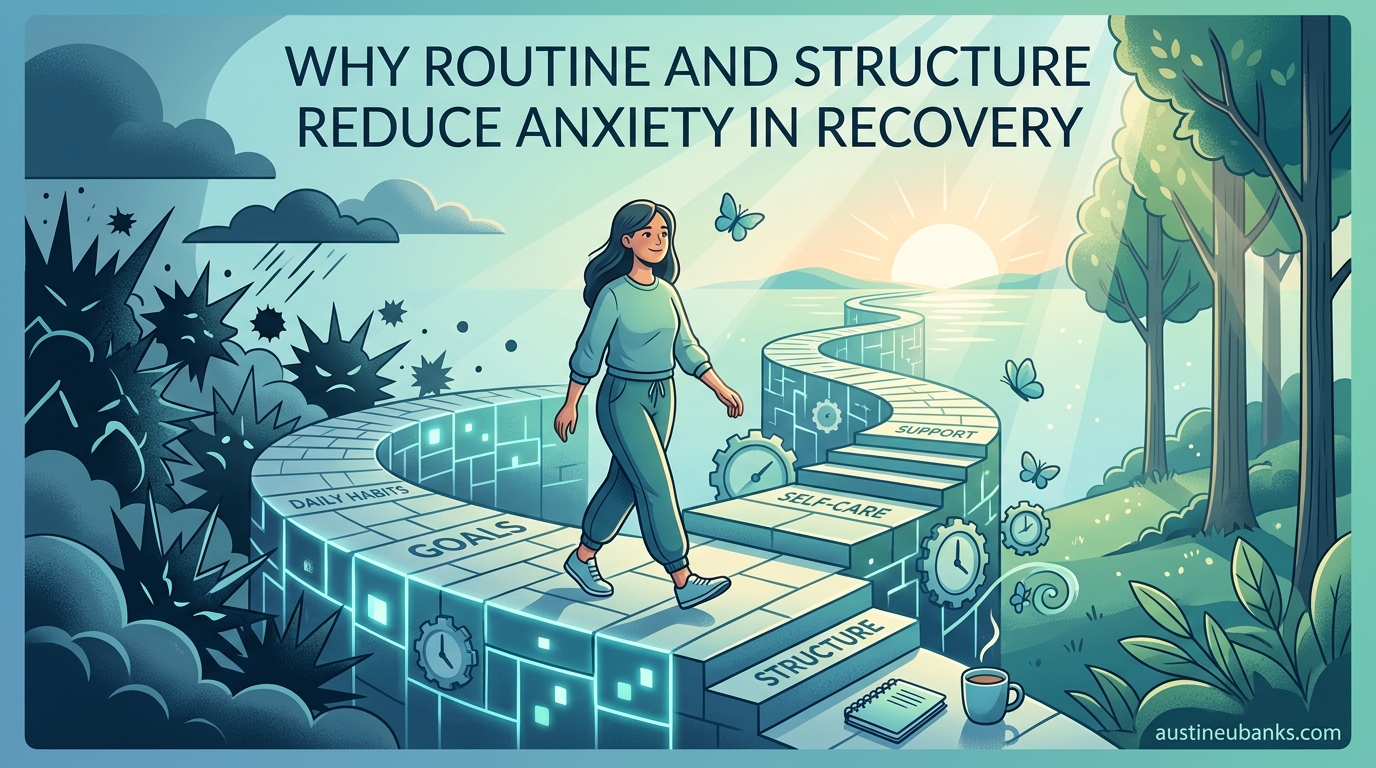
When you leave a treatment program, the sudden absence of a structured schedule can feel like stepping off a cliff. Days blur together. Free time becomes a breeding ground for anxiety, cravings, and intrusive thoughts. This is exactly why routine and structure reduce anxiety in recovery — they give your brain the predictability it desperately needs to heal.
Research from UCLA Health shows that people with structured daily routines experience lower levels of anxiety and depression than those who live without routines. The National Institute on Drug Abuse has similarly found that predictable daily structures play a critical role in relapse prevention. But the question is not just whether routines help — it is why they work so effectively.
In this guide, I will break down the science behind why routine and structure reduce anxiety in recovery, share the specific mechanisms that calm your nervous system, and give you a practical framework for building a routine that actually sticks. Whether you are in early recovery or years into your journey, understanding these principles can transform your daily experience from chaotic to grounded.
Table of Contents
Why Routine and Structure Reduce Anxiety in Recovery: The Science
To understand why routine and structure reduce anxiety in recovery, you have to look at what happens to your brain during active addiction and early sobriety. Substance use disrupts your body’s natural rhythms — sleep cycles, appetite, cortisol patterns, and dopamine regulation all get thrown into chaos. When you remove the substance, your nervous system is left without any anchors.
This is where structure comes in. A daily routine acts as an external regulator for an internal system that is still recalibrating. Think of it like training wheels for your brain. When your nervous system receives consistent signals — waking up at the same time, eating at regular intervals, moving your body, connecting with others — it begins to feel safe again.
Predictability is the core mechanism here. Anxiety thrives on uncertainty. Your brain’s threat-detection center, the amygdala, fires off stress signals whenever it encounters something unfamiliar or unpredictable. During recovery, even small uncertainties can trigger disproportionate anxiety responses. A structured routine removes hundreds of small daily decisions from the threat-detection equation, reducing the overall cognitive load on your nervous system.
This connects to a concept called decision fatigue. Every choice you make throughout the day — what to eat, when to exercise, whether to call your sponsor — drains a finite resource of mental energy. Research shows that the average person makes roughly 35,000 decisions per day. Without a routine, many of those decisions happen consciously, depleting your willpower and leaving you vulnerable to relapse triggers by evening.
A well-designed routine automates healthy behaviors so they require zero willpower. You do not decide to brush your teeth or go to your morning meeting — you just do them because that is what 7 AM means. This automation is where the real anxiety-reduction power lives.
How Routines Reduce Anxiety: Five Key Mechanisms
If you have ever wondered exactly how routines reduce anxiety, the answer involves several overlapping mechanisms in the brain and body. Here are the five most important ones:
1. Stability and Groundedness — A routine provides what psychologists call an “anchor.” When emotions spike or cravings hit, your daily schedule is still there, unchanged. That constancy gives you something to hold onto. Recovery forums are full of people who describe their routine as a lifeline during difficult moments. One Reddit user in the r/Anxiety community put it simply: “Planning my day around a stress-free routine helps significantly.”
2. Restored Sense of Control — Addiction strips away your sense of agency. Every day can feel like you are at the mercy of cravings, emotions, and circumstances. A structured routine puts you back in the driver’s seat. You decide what your day looks like, and that act of deciding — repeated daily — rebuilds self-trust and confidence.
3. Reduced Decision Fatigue — When healthy behaviors become automatic through routine, you stop burning mental energy on decisions that should not require any. That saved energy goes toward processing emotions, resisting triggers, and staying present. You arrive at 5 PM with willpower still in the tank instead of running on empty.
4. Healthy Habit Automation — The brain loves efficiency. When you repeat a behavior in the same context enough times, it shifts from the conscious decision-making part of your brain (the prefrontal cortex) to the automatic behavior center (the basal ganglia). This process, called habit automation, means your healthy choices eventually require zero effort.
5. Nervous System Regulation — Perhaps the most powerful mechanism. Consistent routines help regulate your autonomic nervous system, which controls your fight-or-flight response. Regular sleep, meals, and exercise signal to your body that it is safe, keeping cortisol levels balanced and reducing the frequency and intensity of anxiety spikes.
The Benefits of Structure in Recovery
Beyond anxiety reduction, structure delivers compounding benefits that strengthen your recovery over time. The National Institute on Drug Abuse identifies structured living as one of the key protective factors against relapse. Let me walk through why that is.
Relapse Prevention Through Occupied Time
Boredom is one of the most underestimated relapse triggers. Unstructured free time leaves your mind idle, and an idle mind in early recovery tends to drift toward cravings, negative self-talk, and romanticizing past substance use. A packed-but-balanced schedule keeps you engaged in productive behavior. As one addiction recovery specialist noted, free time in recovery is not really free — it costs you mental peace if left unmanaged.
Self-Control as a Trainable Muscle
Researchers sometimes describe self-control as a muscle that can be strengthened with use and depleted with overexertion. Following a daily routine is essentially a workout for your self-control. Each time you stick to your schedule — getting up on time, attending a meeting, cooking a healthy meal instead of ordering takeout — you strengthen that muscle. Over weeks and months, the discipline required to maintain your routine transfers to other areas, including craving resistance.
Neuroplasticity and Brain Rewiring
This is where the science gets exciting. Neuroplasticity refers to your brain’s ability to reorganize itself by forming new neural connections throughout life. In active addiction, your brain carved deep grooves of destructive behavior patterns. Recovery is the process of carving new grooves — and repetition is the chisel.
Every time you choose a healthy behavior within your routine, you strengthen the neural pathway associated with that choice. The more you repeat it, the stronger and more automatic it becomes. This is not just motivational language — it is measurable brain change. Over time, the old addiction pathways weaken through disuse while the new healthy pathways become your default mode.
Emotional Wellness and Momentum
Structure creates a positive feedback loop. You follow your routine, you feel a sense of accomplishment, that accomplishment boosts your mood and motivation, and you are more likely to follow your routine again the next day. Psychologists call this the momentum effect. Small daily wins compound into major shifts in self-image, from “someone trying to recover” to “someone in recovery.”
Essential Elements of a Recovery Routine
Not all routines are created equal. The specific components you include determine how effectively your routine reduces anxiety and supports recovery. Based on clinical research and real-world recovery experiences, here are the elements that matter most.
Consistent Sleep Schedule
Sleep is the foundation everything else rests on. Poor sleep directly increases anxiety, impairs emotional regulation, and weakens your resistance to cravings. A study from UCLA Health found that irregular sleep patterns are strongly linked to higher rates of anxiety and depression. Aim for 7 to 9 hours of sleep per night, and go to bed and wake up at the same time every day — yes, even on weekends.
Your circadian rhythm, the internal body clock that regulates hormones and energy levels, thrives on consistency. When you anchor your sleep schedule, your cortisol naturally peaks in the morning (helping you feel alert) and drops in the evening (helping you wind down). Irregular sleep throws this entire system off, leaving you with daytime sluggishness and nighttime anxiety.
Regular Exercise
Physical activity is one of the most effective natural anxiety reducers available. Exercise reduces levels of stress hormones like adrenaline and cortisol while stimulating the production of endorphins — your body’s natural mood elevators. You do not need to run marathons. Thirty minutes of moderate movement — walking, swimming, yoga, cycling — five days a week delivers significant mental health benefits.
Recovery forum users consistently cite exercise and outdoor time as routine anchors that changed their trajectory. One person shared that simply getting outside every morning for a walk helped regulate their anxiety within weeks. The combination of physical movement, fresh air, and sunlight exposure is a potent anxiety-fighting tool.
Nutrition and Regular Meals
Your brain needs consistent fuel to regulate emotions effectively. Skipping meals causes blood sugar crashes that mimic anxiety symptoms — racing heart, shakiness, irritability. Eating at regular intervals stabilizes blood sugar and supports balanced neurotransmitter production.
Recovery community members on Reddit frequently recommend reducing sugar intake while eating whole foods like bananas, apples, and complex carbohydrates. These foods support stable energy levels without the crash that processed sugar causes. Meal planning — even simple approaches like prepping breakfast the night before — removes decision fatigue while ensuring your body gets consistent nutrition.
Mindfulness and Meditation
Even five minutes of daily mindfulness practice can significantly reduce anxiety. Meditation trains your brain to observe thoughts without getting swept away by them — a skill that is directly transferable to craving management. Start small with a guided meditation app or simple breathing exercises. The key is consistency over duration. Five minutes daily beats thirty minutes once a week.
Support Groups and Aftercare
Whether it is Alcoholics Anonymous, Narcotics Anonymous, SMART Recovery, or a therapist-led group, regular connection with others in recovery is non-negotiable. Support groups provide accountability, shared experience, and a reminder that you are not alone. Schedule your meetings at consistent times each week and treat them with the same priority as a medical appointment.
How to Build a Daily Routine in Recovery
Knowing what should be in your routine is different from actually building one. Here is a step-by-step approach based on what works in practice, drawn from both clinical recommendations and real recovery experiences.
Step 1: Start With Just Three Anchors
Do not try to build the perfect routine on day one. That is a recipe for burnout. Instead, pick three daily anchors — non-negotiable activities that happen at specific times. A strong starting set is a consistent wake-up time, a morning meeting or mindfulness practice, and a regular bedtime. Everything else can be filled in gradually.
Step 2: Design Your Morning First
The first hour of your day sets the tone for everything that follows. A structured morning routine for anxiety in recovery might look like this: wake at 7 AM, hydrate with a glass of water, spend 10 minutes on meditation or deep breathing, eat a simple breakfast, review your schedule for the day, and do 20 to 30 minutes of light exercise. This sequence addresses your body’s physical needs while giving your mind a calm, focused start.
One common mistake is reaching for your phone first thing. Scrolling social media floods your brain with information and comparison before you have even had water. Reddit users in recovery communities consistently recommend delaying screen time for at least the first 30 minutes of the day.
Step 3: Build in Transition Times
Your routine should include buffer zones between activities. Rushing from one thing to the next creates stress that undermines the anxiety-reducing purpose of structure. Leave 15 minutes between your morning exercise and breakfast. Build in a wind-down period before bed. These transition spaces give your nervous system time to shift gears without triggering a stress response.
Step 4: Track and Adjust Weekly
At the end of each week, take 10 minutes to review what worked and what did not. Did you consistently skip your afternoon walk? Maybe that time slot does not fit your energy levels. Did your evening meditation feel like a chore? Try moving it to the morning. A routine is a living document, not a rigid contract.
The 66-Day Habit Formation Timeline
Research from University College London, published in the European Journal of Social Psychology, found that it takes an average of 66 days for a new behavior to become automatic. The range was 18 to 254 days, meaning some habits form faster and others take much longer. This matters for two reasons.
First, it sets realistic expectations. If you are three weeks into your routine and it still feels like effort, you are not failing — you are perfectly on schedule. Second, it underscores why consistency matters more than intensity. A simple routine you follow for 66 straight days will outperform an elaborate routine you abandon after two weeks.
Flexibility Within Structure
Here is something most recovery articles miss: rigid structure can actually increase anxiety if you treat every deviation as a failure. The goal is not perfection — it is consistency over time. Life will disrupt your routine. You will sleep through your alarm, miss a meeting, or have a day where everything falls apart. That is normal.
The skill to develop is recovery from disruption — the ability to return to your routine the next day without self-judgment. Think of your routine as a GPS. When you take a wrong turn, it does not give up on you. It simply recalculates and gets you back on track. Treat your routine the same way.
Managing Triggers and Setbacks with Structure
A well-designed routine does not eliminate triggers — it reduces your vulnerability to them. When you are well-rested, fed, exercised, and emotionally supported, triggers have less power. But you still need strategies for when they arise.
Identify Your High-Risk Times
Most people in recovery can identify predictable danger zones. For many, it is the gap between work ending and dinner — that stretch of unstructured time where cravings peak. Others struggle with late nights when loneliness sets in. Map your routine to address these windows proactively. Schedule a meeting, a phone call with your sponsor, or a gym session during your highest-risk hours.
Design Your Environment
Your physical environment shapes your behavior more than willpower ever will. If your kitchen is full of processed sugar, your nutrition routine will struggle. If your phone lives on your nightstand, your sleep routine suffers. Spend an afternoon auditing your living space. Remove items that trigger unhealthy behaviors and add cues that support your routine — lay out workout clothes the night before, keep a water bottle on your desk, charge your phone in another room.
This concept, called environmental design, is one of the most under-discussed aspects of recovery. Your routine lives inside your environment. If the two are in conflict, your environment wins every time.
Handling Disrupted Routines
Travel, illness, family emergencies — life will disrupt your carefully built structure. The key is having a minimum viable routine for these situations. What are the two or three things you can do anywhere? Maybe it is five minutes of deep breathing, a short walk, and a phone call to someone in your support network. When your full routine is not possible, fall back on this minimum version rather than abandoning structure entirely.
Recovery forum members emphasize that the body needs time to heal after anxiety episodes. One user described a three-to-four-month timeline where proactive routine adherence made a measurable difference in their symptoms. The takeaway is that structure is not a quick fix — it is a compounding investment that pays off over months, not days.
FAQs
Why is structure and routine important in recovery?
Structure and routine are important in recovery because they provide the predictability your nervous system needs to heal after the chaos of active addiction. The National Institute on Drug Abuse identifies structured daily living as a key protective factor against relapse. Routines reduce anxiety by eliminating hundreds of daily decisions, regulating cortisol levels, and automating healthy behaviors so they require less willpower over time.
How do routines reduce anxiety?
Routines reduce anxiety through five main mechanisms: they provide stability and grounding, restore a sense of personal control, reduce decision fatigue by automating healthy choices, build new neural pathways through repetition (neuroplasticity), and regulate the nervous system by signaling safety through consistency. UCLA Health research confirms that people with structured routines have measurably lower levels of anxiety and depression.
How does structure affect recovery?
Structure affects recovery by occupying free time productively, which prevents the boredom and idle thinking that often trigger relapse. It strengthens self-control like a muscle, supports neuroplasticity by repeating healthy behaviors until they become automatic, and creates positive momentum through daily accomplishments. Structure also ensures that essential recovery activities like sleep, exercise, nutrition, and support group attendance happen consistently.
How to deal with anxiety in recovery?
Deal with anxiety in recovery by building a structured daily routine that includes 7 to 9 hours of consistent sleep, 30 minutes of exercise, regular meals, mindfulness practice, and support group attendance. Start with three daily anchor activities, delay morning screen time, identify your high-risk hours and schedule activities during them, and practice environmental design to reduce triggers. When routines are disrupted, fall back on a minimum viable routine rather than abandoning structure entirely.
How long does it take to form a habit in recovery?
Research from University College London found that it takes an average of 66 days for a new behavior to become automatic, with a range of 18 to 254 days depending on the complexity of the habit and the individual. This means that if your routine still feels difficult after three weeks, you are perfectly on track. Consistency matters more than intensity — a simple routine followed daily for 66 days will outperform an elaborate routine abandoned after two weeks.
Final Thoughts on Structure and Anxiety in Recovery
Understanding why routine and structure reduce anxiety in recovery comes down to a simple truth: your brain heals through repetition. Every morning you wake up on time, every meeting you attend, every healthy meal you eat — these are not just daily tasks. They are neural signals telling your nervous system that it is safe, that life is manageable, and that you are capable of handling whatever comes.
The science is clear. UCLA Health research confirms that structured routines measurably reduce anxiety and depression. The National Institute on Drug Abuse identifies daily structure as a cornerstone of relapse prevention. And the 66-day habit formation research tells us exactly how long it takes for these changes to become automatic.
Start small. Pick three anchors. Give yourself grace when things fall apart, and come back the next day. That is not failure — that is recovery. The routine you build today, imperfect as it may be, is the foundation your future self will thank you for.