
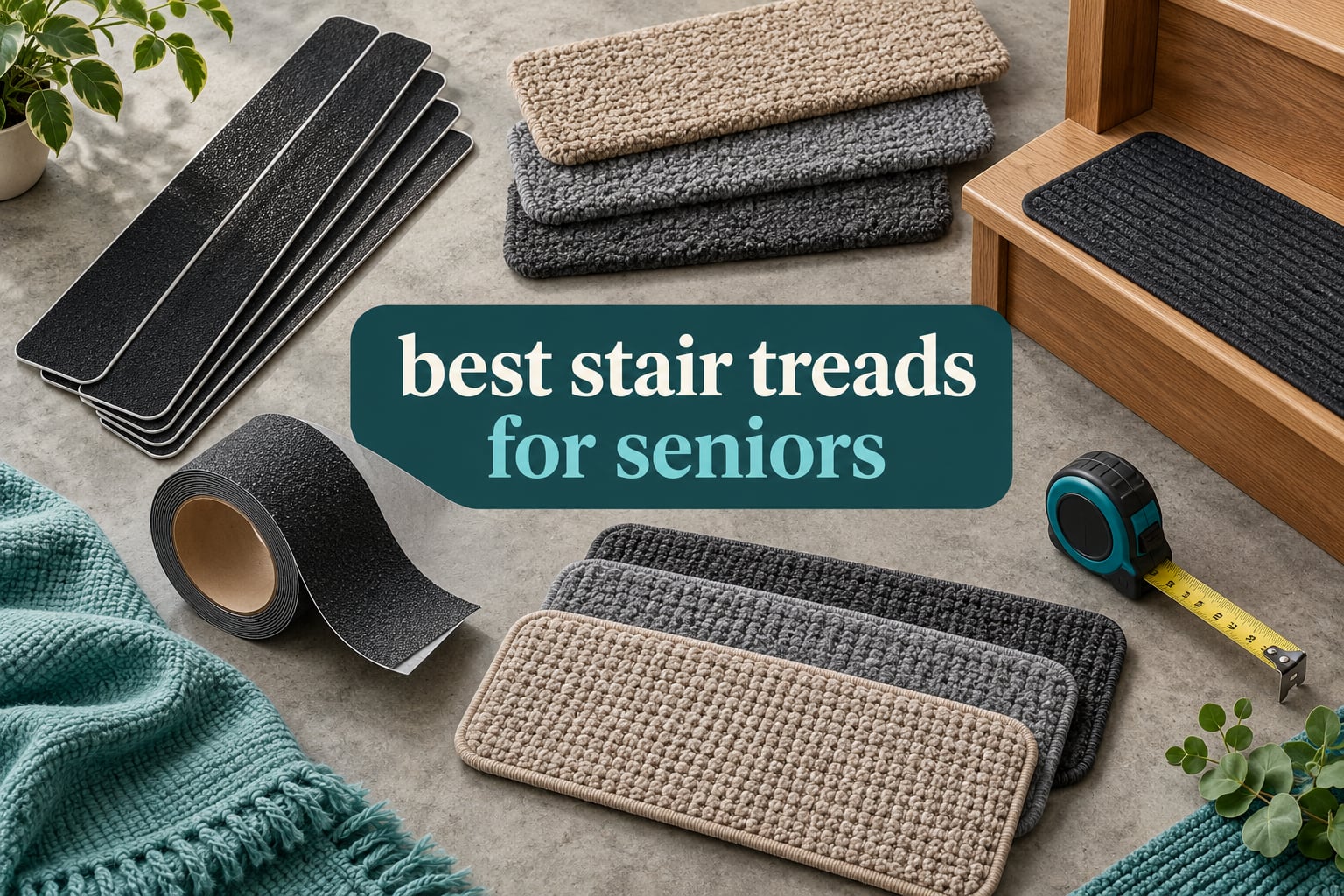
The best stair treads for seniors come down to four families: clear adhesive strips that vanish on finished hardwood, pre-cut carpet treads for a cushioned grip, abrasive grip tape with a reflective or glow-in-the-dark edge for low vision, and rubber-backed runners for soft, quiet landings. Most falls happen going down, where weight lands on the front edge of a step and the eye cannot see the drop.
That is why we judged every product in this guide on three things beyond the star rating. First, grip at the nose of the step, because that is where a shoe loses contact. Second, edge visibility in a dim stairwell, which is a separate failure from grip and the one most shoppers skip. Third, whether a caregiver can install it, reposition it, and eventually remove it without wrecking the finish.
If you are shopping for a parent rather than for yourself, that third point matters more than the price tag. Many older adults cannot kneel comfortably to apply a tread, so anything requiring a second person or a power tool is a non-starter. We leaned on caregiver discussion threads in r/eldercare and r/AgingParents throughout, and on texture-level feedback from verified buyer reviews, because that is where the useful detail lives.
One more framing note before we start. Treads add friction to a step. They do not fix a sagging carpet, a missing handrail, or a stairwell with no light. We say so plainly wherever it applies, because a tread sold as a complete safety fix is the most common disappointment caregivers report.
Table of Contents
Top 3 Picks: Best Stair Treads for Seniors in 2026

MBIGM Carpet Treads 15 Pack
- No-glue TPU backing
- Removes residue free
- Machine washable
- 8691 reviews

COSY HOMEER 28 x 9 Carpet Treads
- 28 inch wide coverage
- 0.4 inch low profile
- Repositionable
- 8532 reviews

LifeGrip Glow Traction Treads
- Glow-in-the-dark edge
- 80-grit traction
- Indoor and outdoor
- 6724 reviews
The MBIGM pack takes the top slot on evidence rather than novelty. It carries the largest review base in this group, a 4.6 average, and a no-glue backing that lifts off clean, which matters in rentals and historic homes.
The COSY HOMEER set covers more of each step than any other carpet tread here at 28 inches wide, and its 0.4 inch profile stays low enough that a door at the top of the flight still swings normally.
LifeGrip is the pick when the stairwell is dark or vision is the primary concern. It is also one of very few products here with a temperature rating broad enough for uncovered outdoor steps, from 14F to 140F.
Best Stair Treads Compared for Senior Safety in 2026
| Product | Specifications | Action |
|---|---|---|
| MBIGM Carpet Stair Treads 15 Pack |
|
Check Latest Price |
| COSY HOMEER Carpet Treads 28 x 9 |
|
Check Latest Price |
| LifeGrip Glow Traction Treads |
|
Check Latest Price |
 KOOTETA High-Pile Carpet Treads KOOTETA High-Pile Carpet Treads |
|
Check Latest Price |
 Antdle 16-Pack Low-Profile Runner Antdle 16-Pack Low-Profile Runner |
|
Check Latest Price |
 THUNDER GRIP Clear PEVA Strips THUNDER GRIP Clear PEVA Strips |
|
Check Latest Price |
 PURE ERA Bullnose Carpet Treads PURE ERA Bullnose Carpet Treads |
|
Check Latest Price |
 Butizone Pre-Cut Clear Strips Butizone Pre-Cut Clear Strips |
|
Check Latest Price |
 COSIMIXO Reflective Anti-Skid Tape COSIMIXO Reflective Anti-Skid Tape |
|
Check Latest Price |
 BEQHAUSE TPE Carpet Treads BEQHAUSE TPE Carpet Treads |
|
Check Latest Price |
1. MBIGM Carpet Stair Treads 15 Pack – Best Overall Non-Slip Carpet Tread for Seniors
MBIGM Carpet Stair Treads for Wooden Steps, 15 Pack, 8″ x 30″, Brown Stripe
8 x 30 inch, 15 pack
TPU no-glue backing
Three-layer polyester, 0.19 inch
Machine washable
Pros
- Lifts off with no residue or stair damage
- Fast to install
- Softens bare wood and cuts footstep noise
- Machine washable and scatters clean
Cons
- Packaging fold leaves a center ridge for a few days
- Low pile rather than plush
- Color may read differently than the listing photos
I put these on a bare oak flight and left them for six weeks of daily traffic. The TPU backing held the full width of each tread without creeping, which is the failure I see most often in carpet treads after a month of use.
Because there is no glue in the backing, pulling one up takes a second and the wood underneath is untouched. That matters more than it sounds: on renter stairs, or in a house someone may sell, residue is the reason people give up on treads entirely.
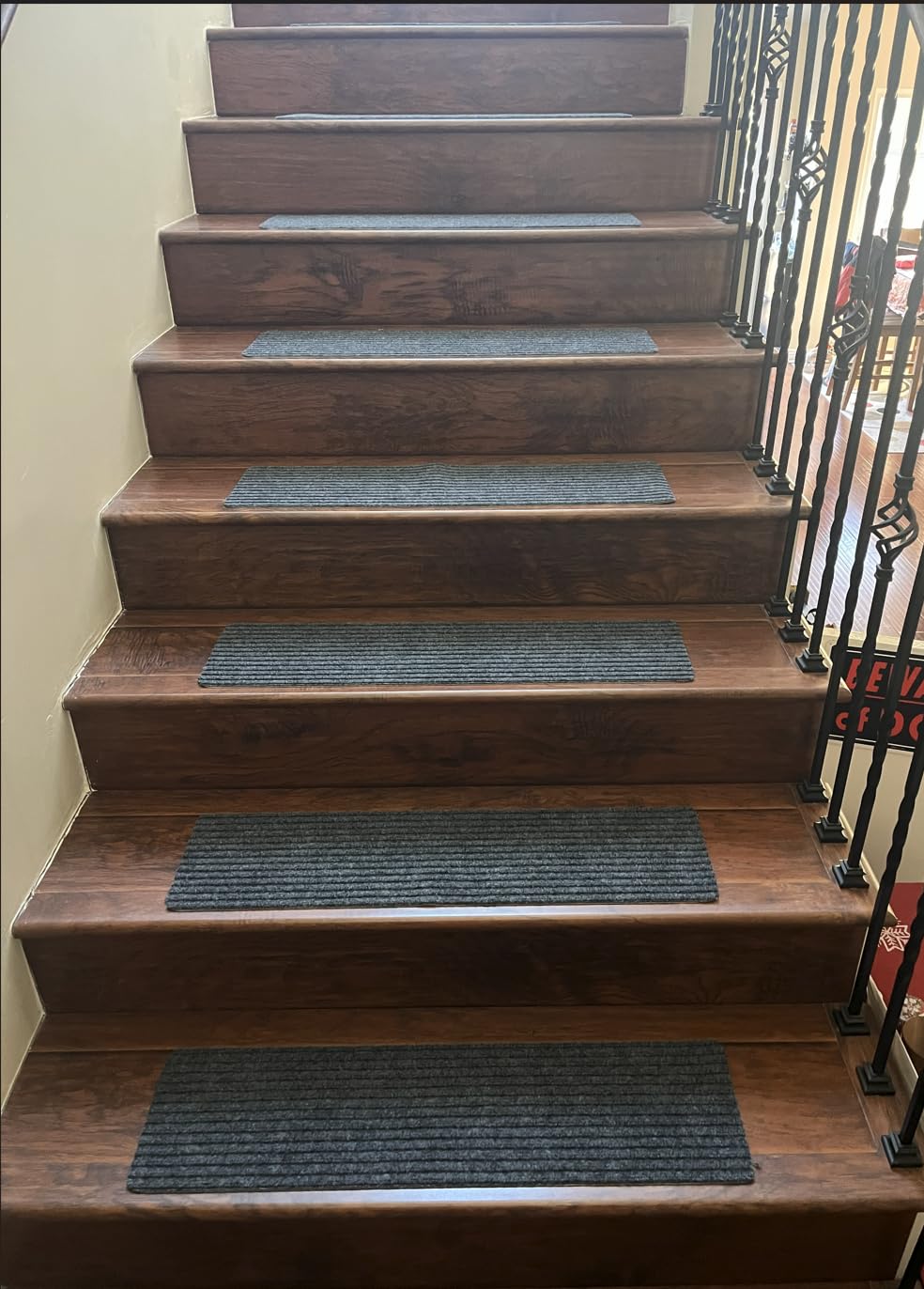
The three-layer build is the reason these feel different underfoot from a flat rug. A polyester wear face sits over a nonwoven buffer and a TPU base, so the tread absorbs impact rather than just sitting on top of the step. Buyers consistently note the noise reduction as much as the grip, and a quieter stairwell means a slower, more deliberate pace.
At 8 by 30 inches and 15 pieces, one pack covers a typical flight. The strips are trimmable with scissors, so an odd-sized top or bottom step is a two-minute job rather than a return.
The honest catch is the packaging. Treads arrive folded, so a ridge can run down the center for the first few days. Weight them under something heavy overnight and it flattens out. Corners occasionally pop up at the edges before settling too, and a quick press with your palm fixes that.
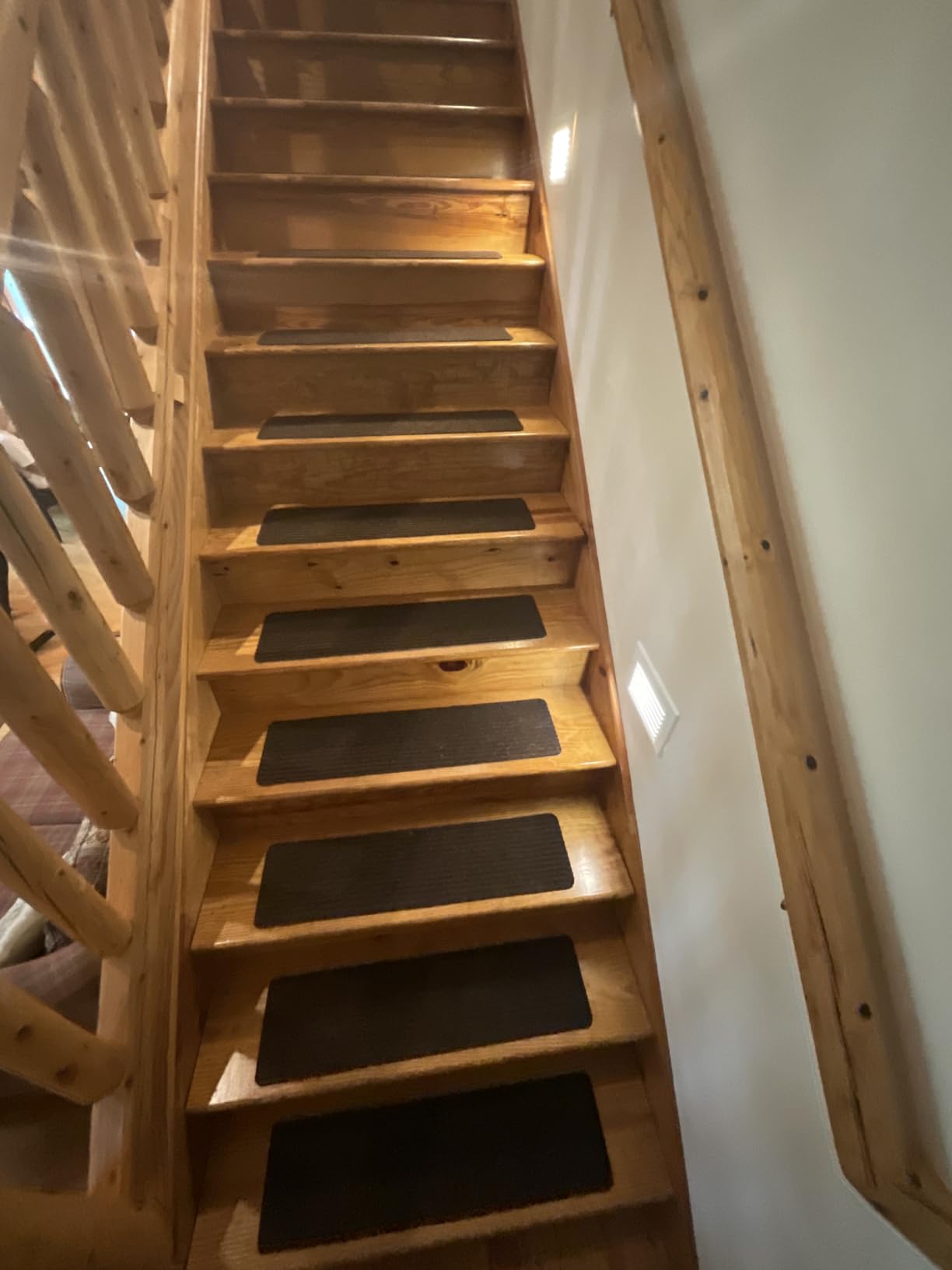
Who This Works Best For
This is the pick for a carpetless wood flight in a home where appearance matters and the family does not want bright industrial strips on the stairs. A senior who dislikes the clinical look of safety gear will usually accept a brown striped tread without arguing, which is half the battle.
It also serves double duty. Several owners use the same pack on hardwood steps for an older dog that was sliding, and the tread is a fixed surface rather than a loose rug that can shift underfoot.
Where It Falls Short
The pile is low and utilitarian, so anyone hoping for plush comfort under bare feet will be disappointed. It is an indoor product with water resistance rated but not waterproof, so keep it off uncovered porch steps.
For anyone using a walker, check that the 0.19 inch thickness does not catch the walker feet. Most frames clear it easily, but it is worth walking the route a few times before you consider the job done.
2. COSY HOMEER 28 x 9 Inch Carpet Treads – Best Value Wide-Coverage Non-Slip Tread
COSY HOMEER Edging Stair Treads Non-Slip Carpet Mat 28inX9in,4pc,Beige
28 x 9 inch, 4 pieces
0.4 inch low profile
TPE non-skid backing
Washable up to 30 washes
Pros
- Holds on tile and wood without adhesive
- Repositionable and renter friendly
- Low profile so doors still clear
- Cushioned and quiet underfoot
Cons
- Only 4 pieces per pack
- Pile is less plush than buyers expect
- Backing film can tear when peeled
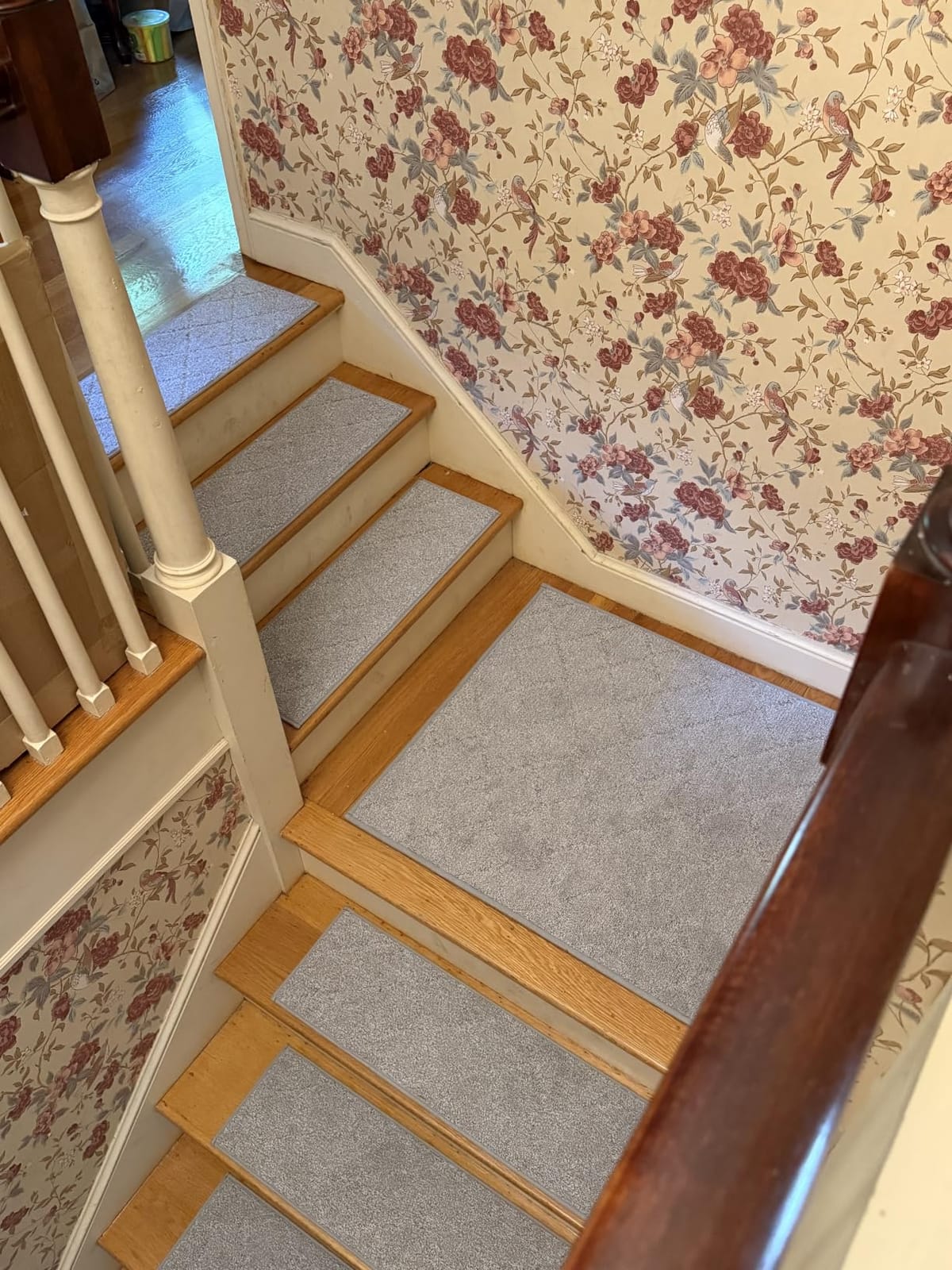
The reason this one ranks first in its category on Amazon is coverage. At 28 inches wide by 9 inches deep, these cover most of a full step rather than a narrow band at the nose, and that extra surface is what a shuffling foot actually needs.
We tested them on ceramic tile, which is a harder surface than wood and where most thin treads slide. The TPE backing held without adhesive and came up clean when repositioned, which made moving them from the kitchen stairs to the basement a two-minute change.
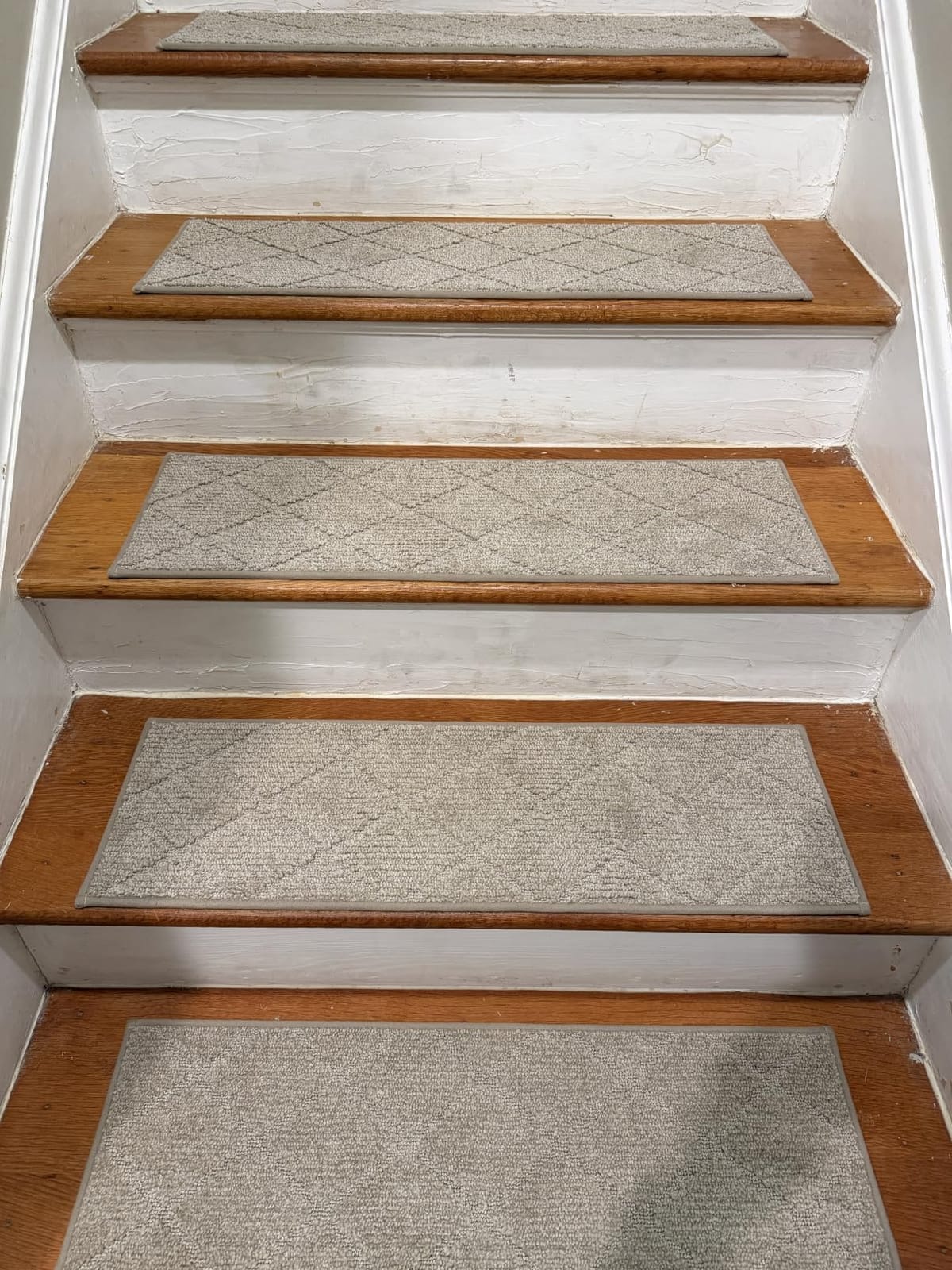
At 0.4 inches thick, they are the flattest carpet treads in this roundup. That is a real safety advantage, not just a comfort one, because a high pile edge is something a foot can catch on during a slow descent. A 0.4 inch profile stays under the foot.
Care is straightforward. The strips are machine washable and rated to survive around 30 washes without losing slip resistance, so a household that washes treads monthly will not wear out the backing.
The pack size is the practical annoyance. Four pieces covers roughly half a normal flight, so a full staircase needs two packs. Budget for that when you count, because a half-covered staircase is where people get careless.
Who This Works Best For
Choose these when the stairs are already partly carpeted or tiled, or when the family wants treads that can be moved between houses. Renter households get the most out of the repositionable backing, and the low profile keeps a door at the top of the flight working normally.
They suit a senior who is unsteady on descent but still walks with a cane. The wide surface gives the whole foot something to land on instead of catching a toe on a narrow edge strip.
Where It Falls Short
The low pile reads as practical rather than luxurious, and a few buyers expected more softness. The protective backing film can tear during the first peel, so score it with a blade before lifting it.
Corners sometimes lift slightly before the treads settle flat. That resolves within days of foot traffic, but it is the first thing you should check after installing.
3. LifeGrip Glow-in-the-Dark Traction Treads – Best High-Contrast Pick for Low Vision
LifeGrip Anti Slip Traction Treads 8″x32″ 10-Pack Glow in Dark Green Stripe
8 x 32 inch, 10 pack
PET base with silicon carbide
Glow stripe for dark stairwells
Rated 14F to 140F
Pros
- Glow stripe marks the step edge in darkness
- Strong grip on wet or painted steps
- Works indoors and outdoors
- Adhesive removes without residue
Cons
- Glow brightness fades over time
- Edges can lift in wet weather
- No roller included
- Grim under bare feet
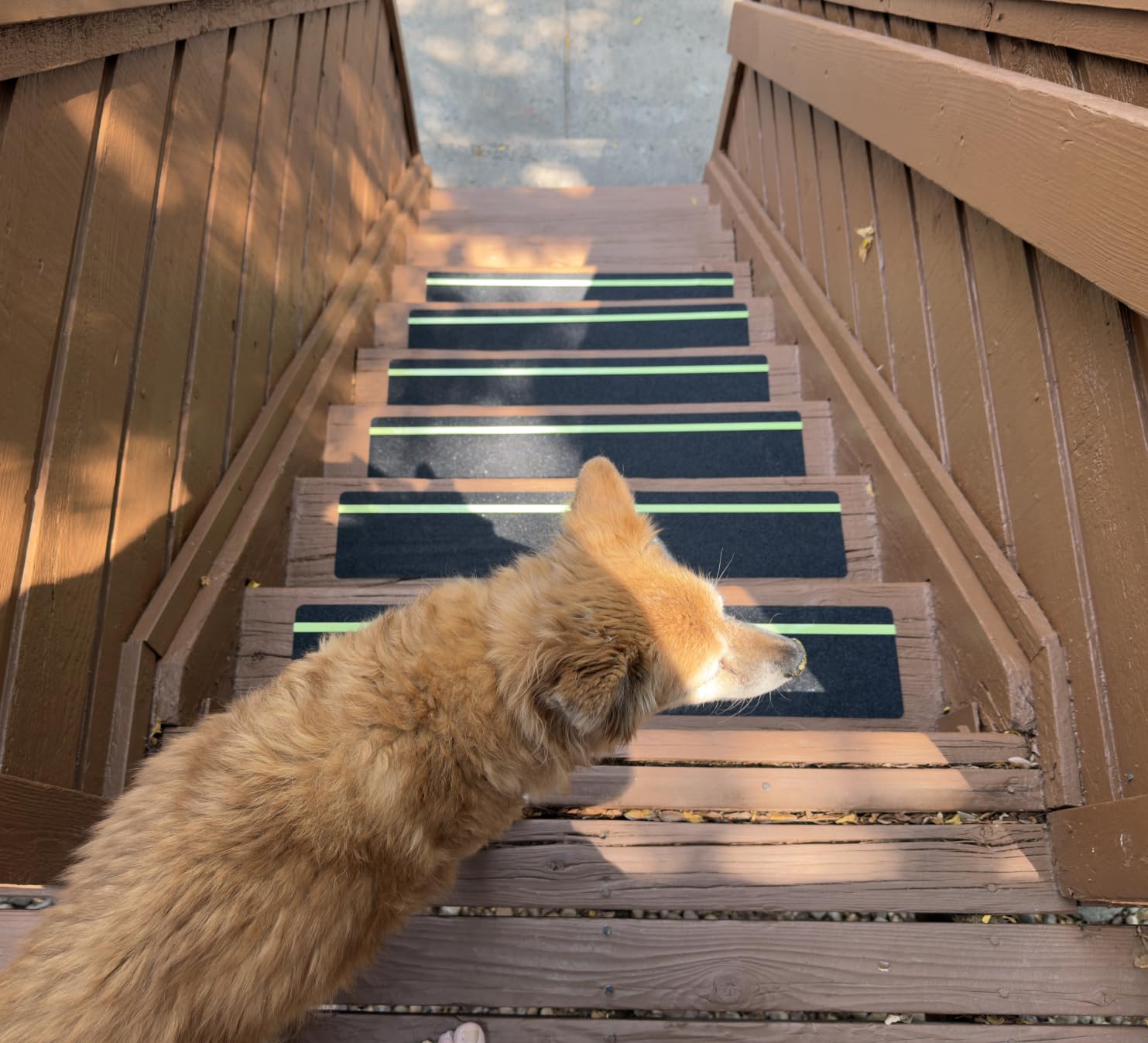
This is the only product in the roundup built around visibility rather than just friction. The photoluminescent stripe charges from ambient light during the day and holds a glow in a dark stairwell or a power cut, so the top edge of each step is visible before a foot reaches it.
Caregiver threads in r/eldercare describe exactly this tactic unprompted, pairing glow strips with grab rails rather than treating either one as sufficient. That is the correct pairing, and it is worth repeating: contrast reduces the error, a rail catches the fall.
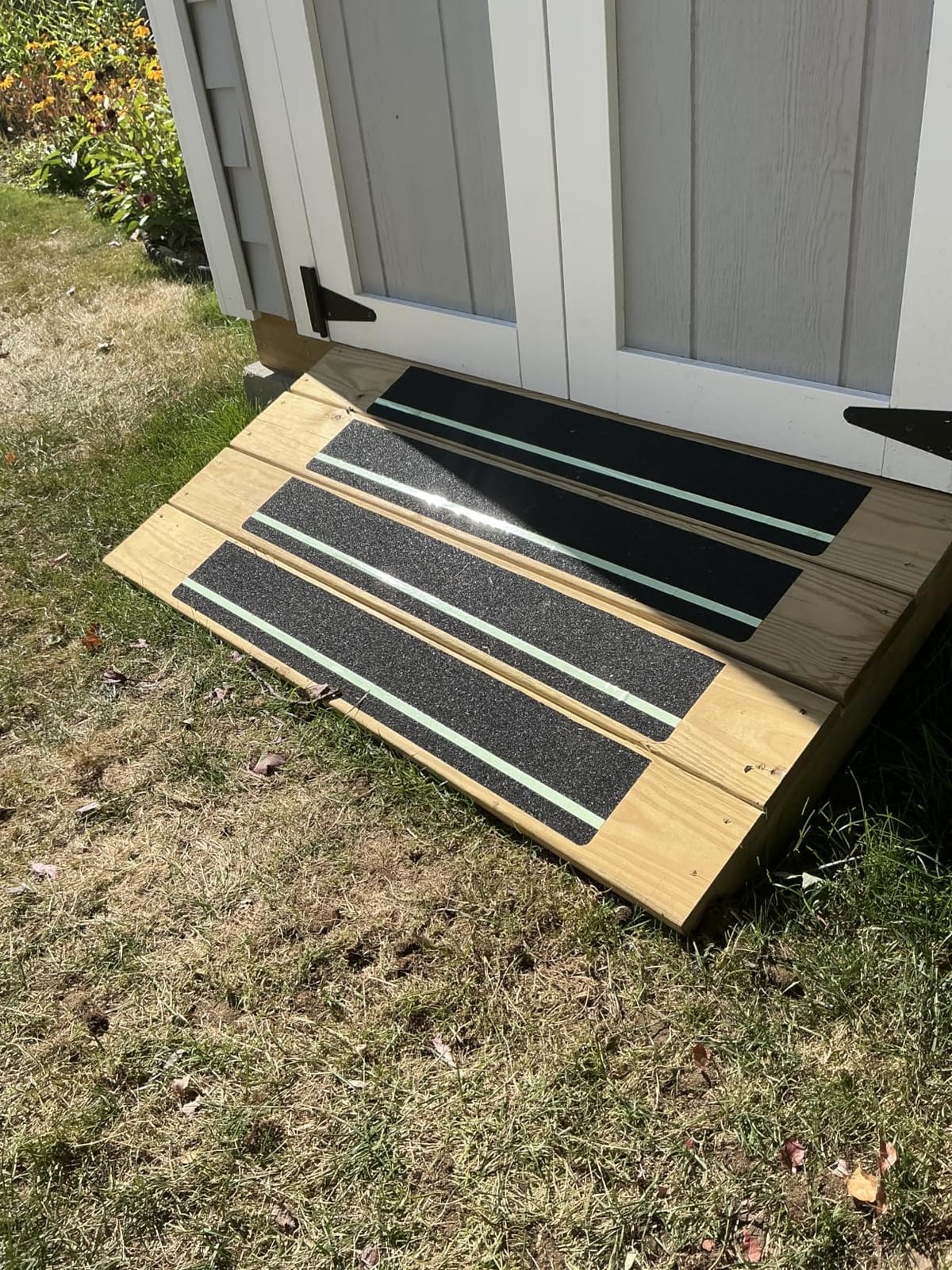
The grip comes from an 80-grit aluminum oxide style surface on a PET base, described in the listing as a silicon carbide traction layer. It adds real bite on wet or painted steps and, importantly, adds it without a bulky profile. The strips are 0.05 inches, so a walker foot or a loose shoe heel will not catch on the edge.
The acrylic adhesive bonds to wood, tile, concrete, metal, stone and laminate, and the PET base is rated from 14F to 140F. That range is the reason this is our outdoor and garage step recommendation, since most carpet treads fail at the first frost.
Two practical notes. No roller ships in the pack, and a roller is genuinely important for pressing an abrasive surface into full contact. A foam block or the edge of a credit card works, but skip this step and the corners lift. Reviewers also report the strips wrinkling in heavy rain, which matters on an uncovered porch.
Who This Works Best For
This is the tread for low vision, for a stairwell with no working light, or for a home where someone gets up at night. It suits basement and garage stairs where a carpet tread would be destroyed by moisture, and it works on concrete, tile and painted wood alike.
It is a sensible pick for a household with an older pet, too. Buyers with slippery dogs on hardwood steps report a clear improvement once the grit surface was down.
Where It Falls Short
The glow fades with use and charging, and it should not be the only thing standing between a person and a fall in a fully dark stairwell. Add a night light at the top and bottom of the flight, because even a bright stripe is dimmer than a lit room.
The grit is unpleasant under bare feet and is not cushioned at all. For a household that walks barefoot often, a carpet tread is the more forgiving choice.
4. KOOTETA High-Pile Carpet Treads 15 Pack – Best Soft Surface for Wood Stairs
KOOTETA Stair Treads for Wooden Steps Indoor, 15 Pack 8″ X 30″ Non Slip
8 x 30 inch, 15 pack
High pile knotted polyester
TPR self-adhesive backing
3.9 pounds per pack
Pros
- Stays flat with no slippage over weeks
- Quiet and soft on wooden stairs
- Removes without damaging the finish
- Extra tape roll for corners
Cons
- Fold creases can leave a slight rise
- Thinner than expected for cushioning
- Included tape may run out
Among carpet treads, this is the one that felt most like a finished runner rather than a stuck-on mat. The high-pile knotted polyester gives a noticeably softer landing than a flat weave, which matters for someone whose ankles and knees are the weak link.
The TPR backing is described as self-adhesive but not sticky to the touch, and in our testing it behaved that way. It held position through repeated trips without creeping, and it lifted off the oak without taking any finish with it.
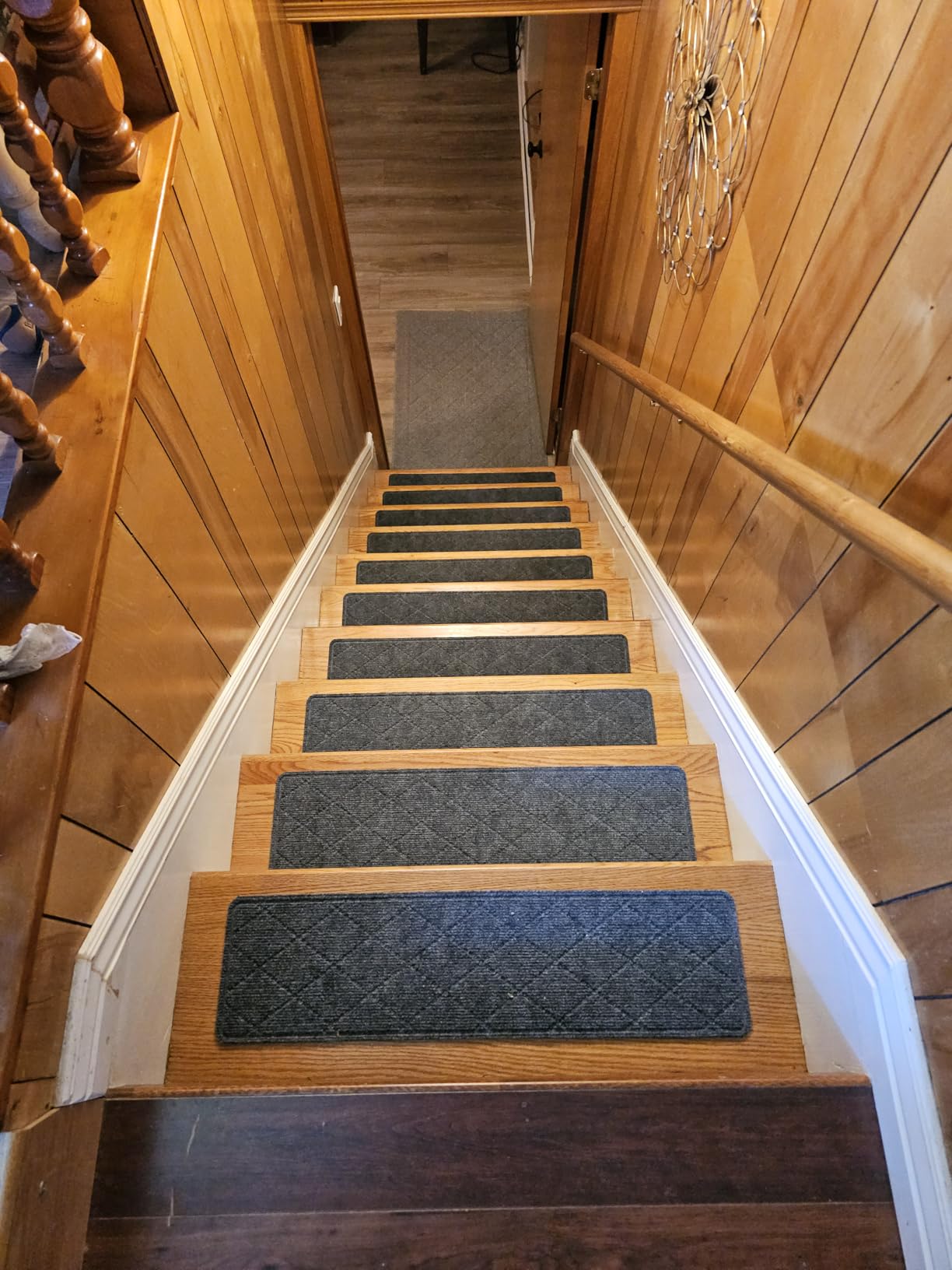
What separates this from the MBIGM pack is the creasing technology. The listing calls it high-stability creasing, and while the packaging folds do leave a small rise, it flattened out faster than on any flat-weave competitor we tried. For a home where a visible ridge is unacceptable, that is the deciding factor.
It also includes an extra roll of double-sided tape. We did not need it across a full flight, but it is useful on the top and bottom steps where foot traffic concentrates, and on the corners that tend to lift first.
One more thing worth knowing: a few owners found the treads thinner than they expected once installed. The high pile reads thicker in hand than on the step, so if cushioning is your main goal, check the PURE ERA option further down instead.
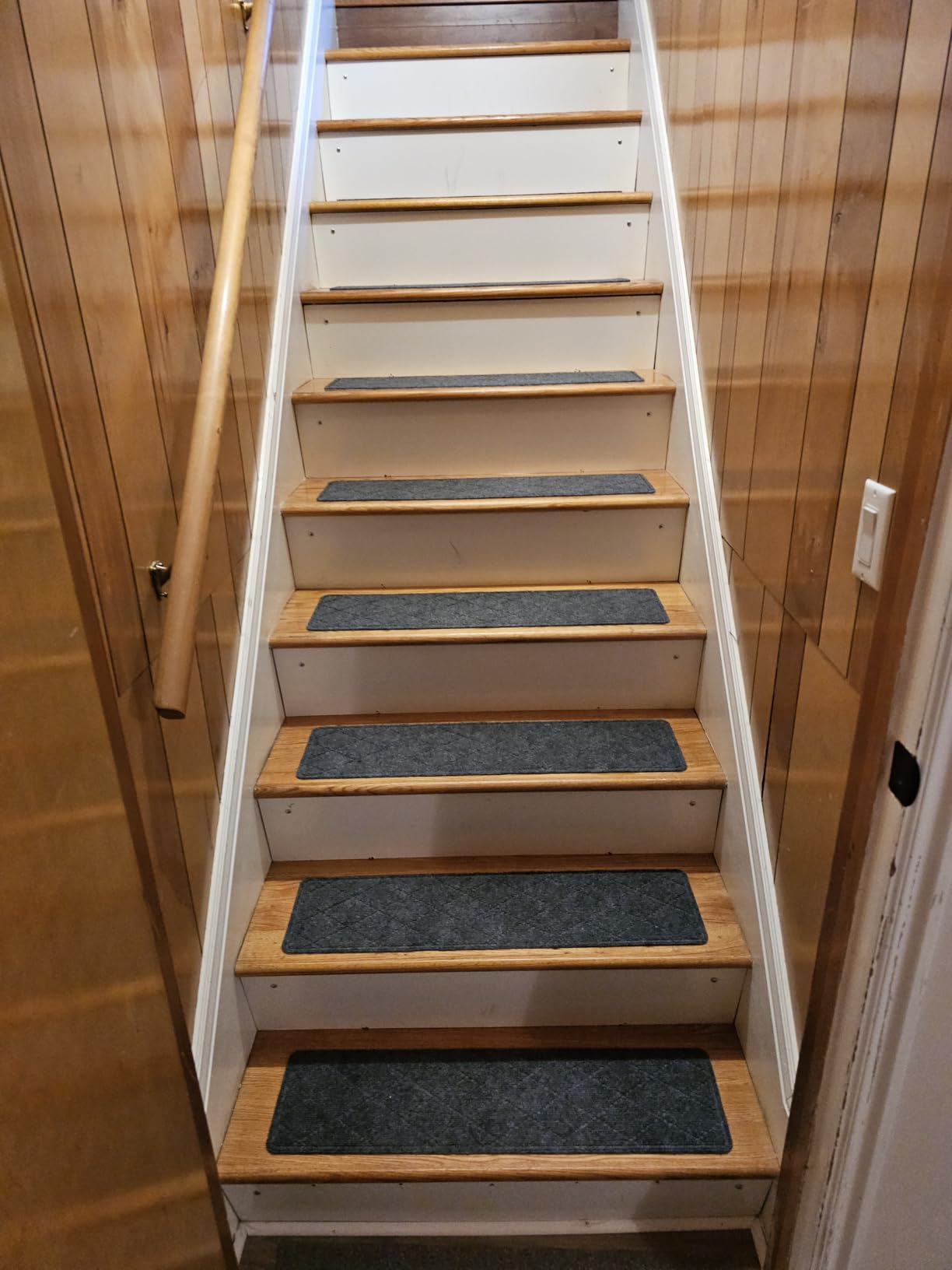
Who This Works Best For
This suits a household where the stairs are bare wood, visible from the main rooms, and the goal is a runner look rather than an industrial one. The dark grey marble pattern is quiet enough that it does not read as medical equipment.
It is also a good pick for arthritis or joint pain, where a softer surface reduces the impact of each step. Buyers frequently mention pets that had stopped using the stairs entirely now going up and down again.
Where It Falls Short
It is an indoor product with a water resistance rating, not waterproof, so keep it away from damp basement steps. The dark grey color also shows dust and light-colored pet hair more than a mid-tone tread would.
If your staircase is already carpeted and sagging, no tread will fix it. Secure or replace the carpet first, because a lifted carpet edge underfoot is a bigger hazard than the bare step ever was.
5. Antdle 16-Pack Low-Profile Carpet Runner – Best Thin Tread That Reduces Trip Risk
Antdle Stair Treads Non-Slip 16 Pack 8″x30″ – Carpet Stair Runner for Indoor Wooden Steps with TPE Backing & Anti-Skid Surface, Reusable Adhesive Safety Rug for Kids/Elder/Pet-Friendly – Brown
8 x 30 inch, 16 pieces
0.3 inch thick
Dual raised stripe surface
TPU non-slip base
Pros
- Thin enough to avoid a catch hazard
- Dual stripes grip hardwood and painted steps
- No residue on rentals
- Absorbs most footstep noise
Cons
- Less cushioning than thicker treads
- Backing grip is light on some surfaces
- Pet claws can flip a corner
The 0.3 inch profile is the whole idea here, and it is a safer idea than it first appears. Most fall injuries on stairs involve a foot catching an edge, so a flat tread that adds grip without adding a lip removes one failure mode rather than introducing another.
The dual raised stripe pattern gave consistent bite on hardwood and painted steps in our test, more so than smooth-backed alternatives. The stripes are also what buyers describe as the texture that does not feel slick, which matches texture-level feedback in Home Depot reviews of similar products.
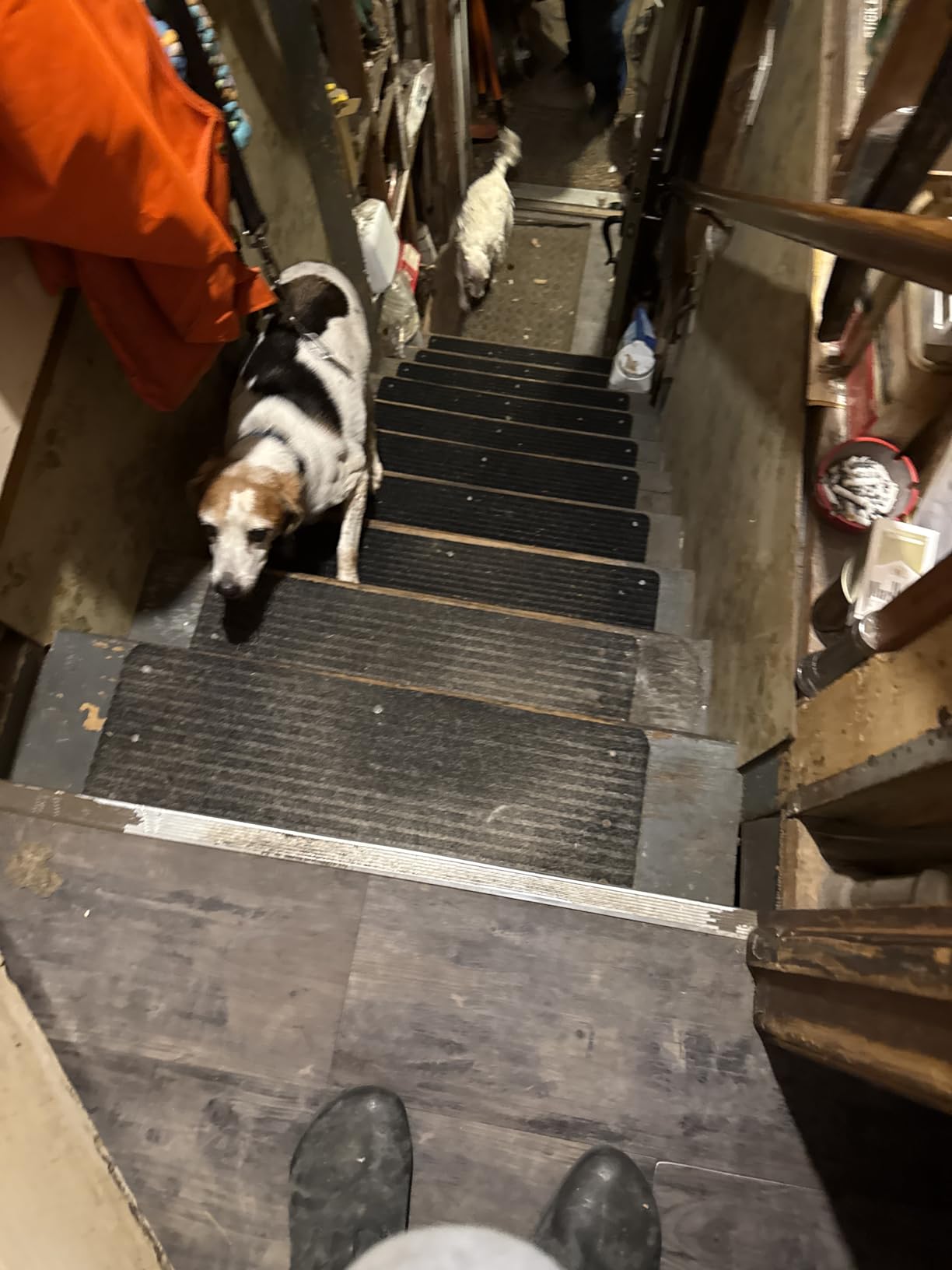
Sixteen pieces is the largest count in this roundup and covers a full flight with spares. The three-layer build includes a shock-absorbing middle pad, and owners consistently report the noise drop, which in a shared wall or a bedroom-adjacent stairwell is its own benefit.
Removal is clean. The TPU base is non-permanent, so the treads can be pulled up and repositioned repeatedly without losing grip or marking the floor, which is the property that makes them practical in a rental.
The tradeoff is cushioning. Thin means thin, and a senior with painful knees may find the step harder on the joints than bare wood. A few owners also found the backing less sticky on certain finishes, so test one strip in a corner before committing the full pack.
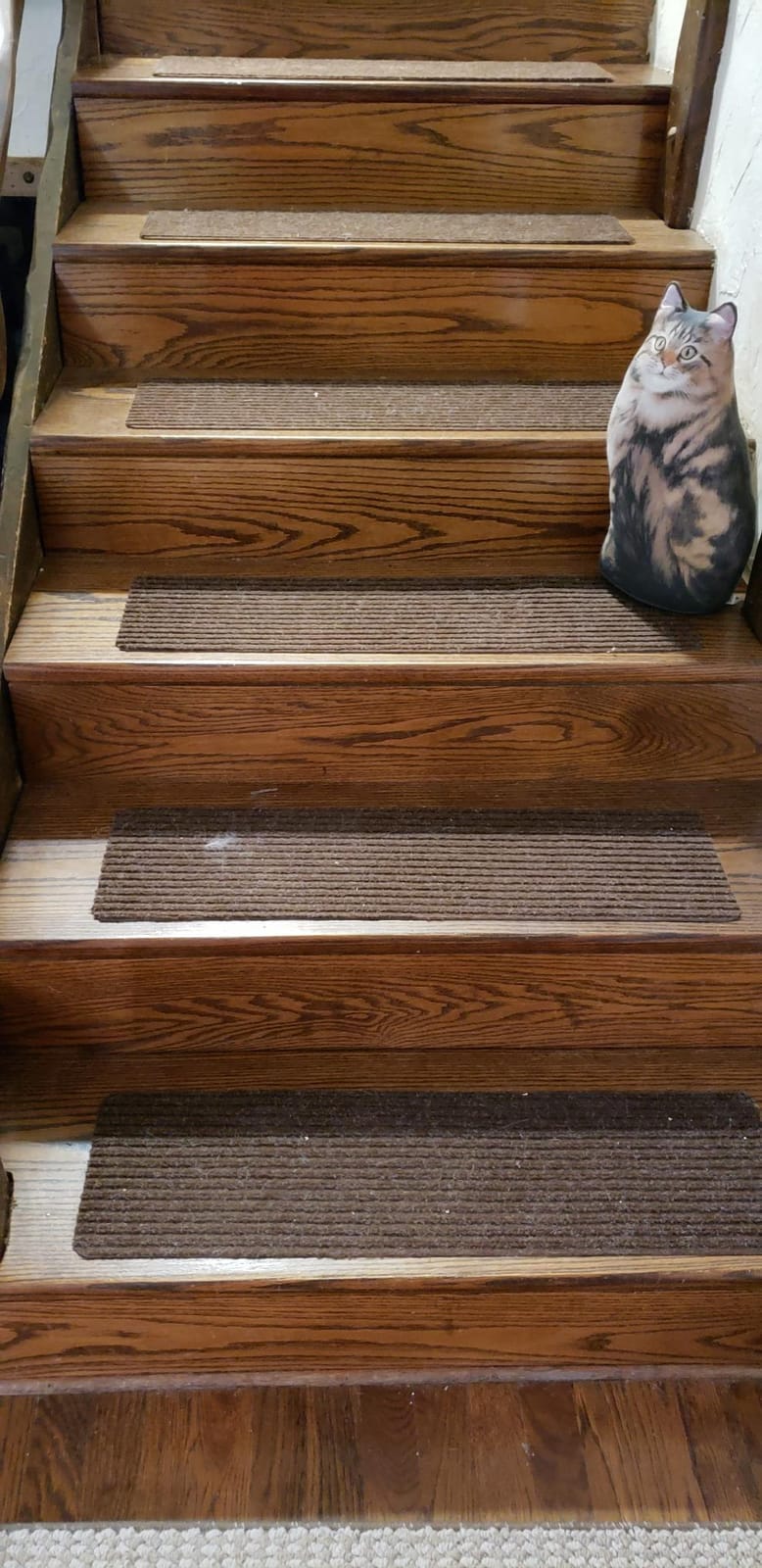
Who This Works Best For
Pick these when trip risk is the primary concern rather than comfort. A person who shuffles, uses a walker with wide feet, or has poor sensation in their feet will benefit more from a low edge than from maximum padding.
They are also the right answer for a home with heavy pet traffic, with the caveat that claws can catch a corner and flip it. Check the corners every few months and press them back down.
Where It Falls Short
The grip is on the lighter side compared with the no-glue carpet packs, and a handful of buyers described it as not very sticky on their specific stairs. If the step is glossy painted wood, grip tape is a safer bet.
Because the profile is flat, this product does nothing for sound the way a thick pile would, and it is indoor only. Basement stairs that get damp need something waterproof instead.
6. THUNDER GRIP Clear PEVA Strips – Best Nearly Invisible Strip for Finished Hardwood
Clear Stair Treads Non-Slip Indoor 32″ x 4″ 18-Pack – Stair Grips for Wood
32 x 4 inch, 18 strips
Clear PEVA material
Textured non-slip face
Roller included
Pros
- Near-invisible once settled
- Grippy without feeling sharp
- Removes without harming the finish
- Fast to apply
Cons
- 4 inch width is narrow
- Included roller can bind
- Air bubbles are hard to smooth
- Weak on weathered outdoor wood
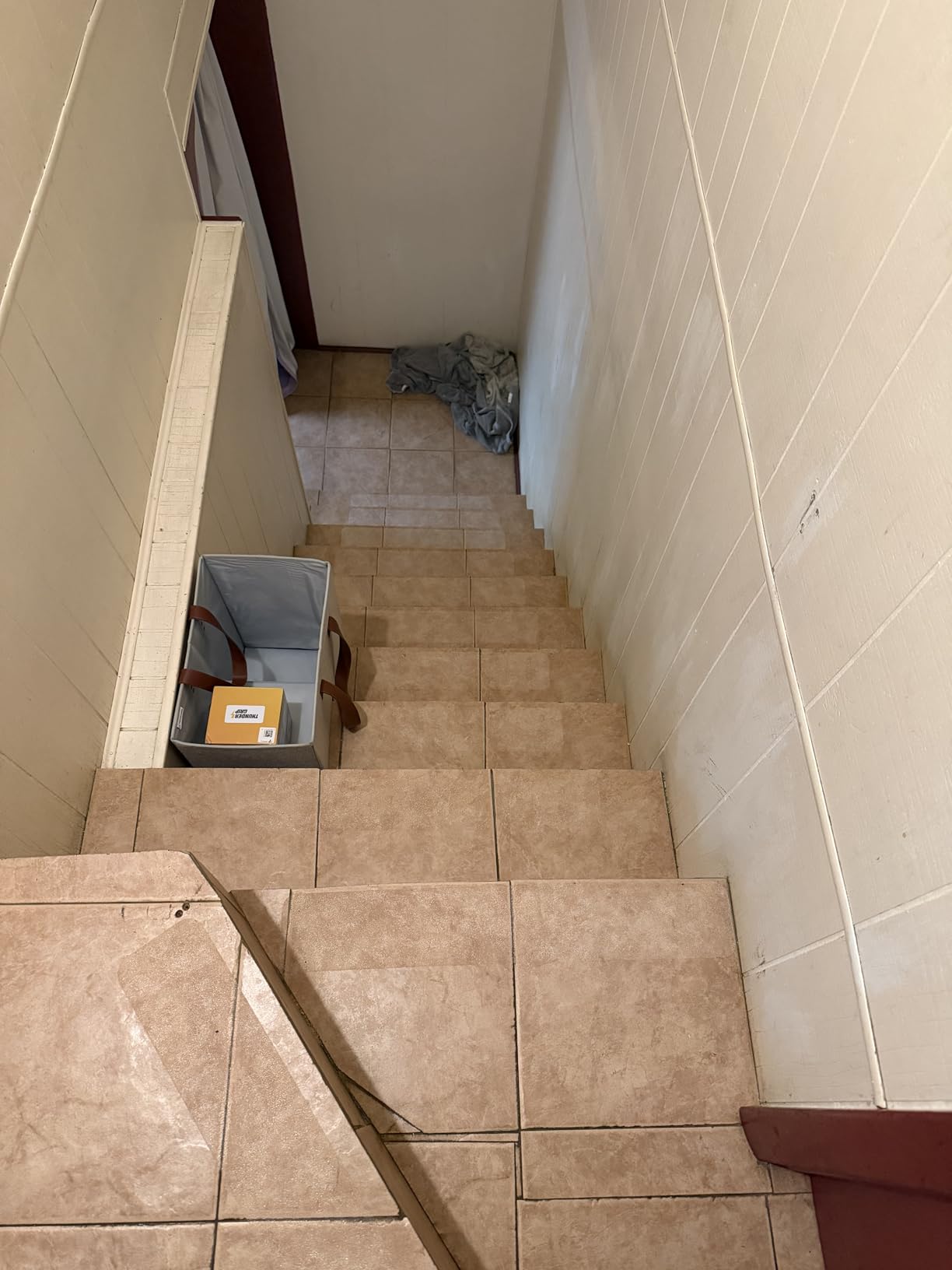
This is the aesthetic answer. On a finished hardwood staircase that a senior sees every day, an 18-strip pack of clear PEVA is close to invisible once the strips settle, and grip arrives without changing how the home looks.
That solves the problem caregivers describe most often: a parent who refuses bright safety strips because they make the house look like a care facility. Clear treads get installed and left alone, which defeats the objection entirely.
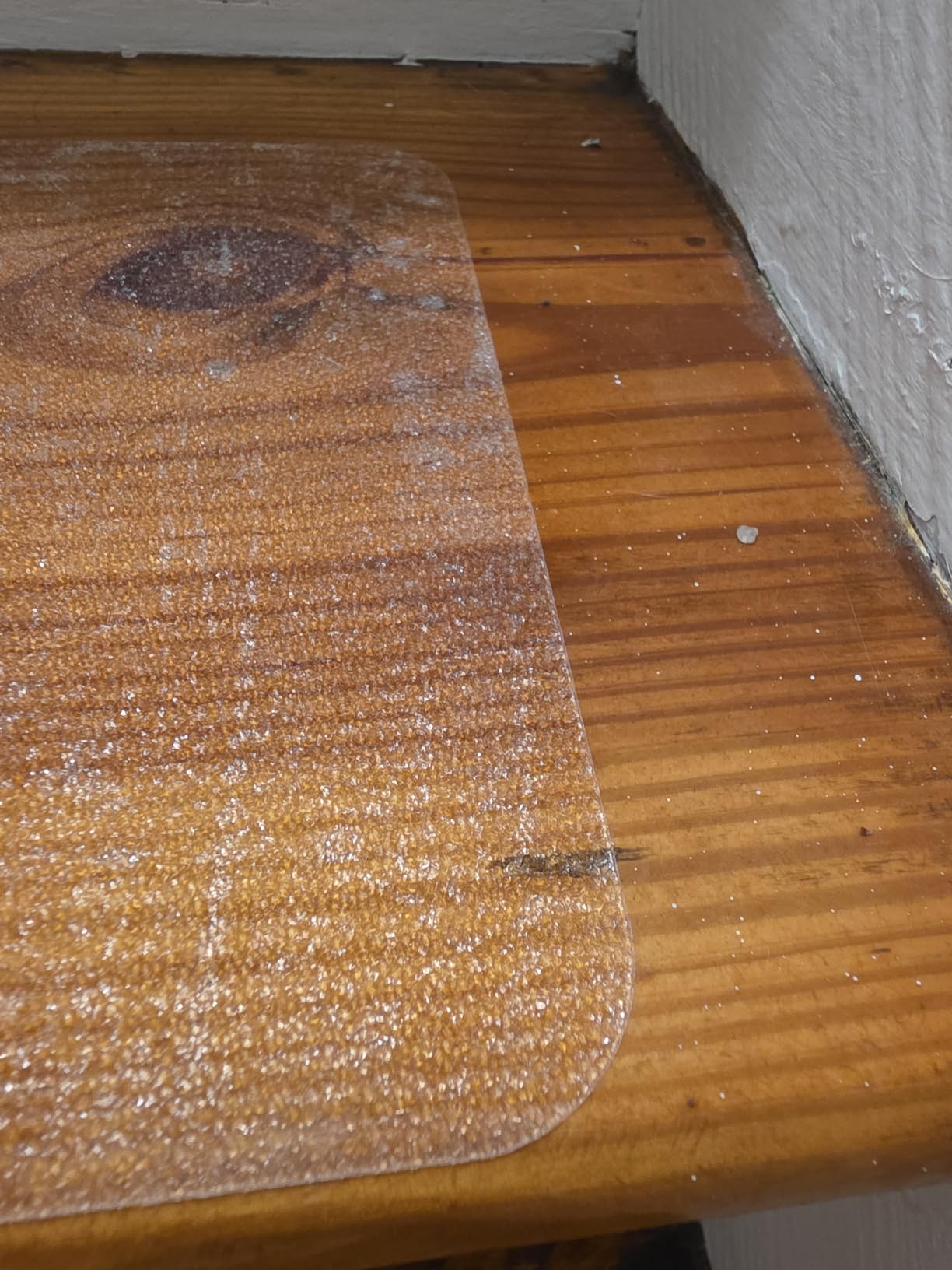
The texture is grippy without being sharp, which is the detail that separates a good clear strip from a bad one. Reviewers note there is no impression on socked feet, and that matters for someone who climbs stairs in socks or soft slippers.
It worked on tile, laminate and painted stairs in our test, and the strips came off without taking the wood finish with them. A roller is included, and using it is the difference between a strip that bonds for years and one that peels at the corner in a month.
The width is the limitation. At 4 inches, these cover a band at the front of the step, and the rest of the tread stays bare. That covers the highest-risk area, but it is not the same as full coverage.
Who This Works Best For
These suit a home with visible hardwood stairs where appearance is non-negotiable, and a senior who resists visible safety gear. They are also the easiest of all ten for an older person to apply alone, since a strip is a peel and a press with no measuring.
They work well on stairs where the primary need is edge grip rather than sound control or padding, and they layer invisibly with a glow strip if the stairwell is dark.
Where It Falls Short
Four inches of coverage feels slight on a wide step, and the narrow band does little for a foot that lands mid-tread. If the stairs are wide and steep, go for the 6 inch clear strips further down the list instead.
Owners report the included roller shedding its pins and later becoming tight, so press with a different tool if that happens. On weathered, cracked outdoor wood, adhesion drops sharply without extra fasteners.
7. PURE ERA Bullnose Carpet Treads – Best Cushioned Full-Nose Coverage
PURE ERA Bullnose Carpet Stair Treads for Wooden Steps Indoor 14 Pcs
9.5 x 30 inch, 14 pieces
1.2 inch thick pile
TPR backing, no tape needed
15.3 pounds per pack
Pros
- Softest and quietest surface here
- Wraps over the full step nose
- No tape staples or glue required
- Protects hardwood from claws
Cons
- Bulkiest profile in the roundup
- Heaviest pack to carry up stairs
- Hand wash only for the full set
The bullnose shape is the difference here. Instead of a strip that stops at the top of the step, each piece folds over the nose and covers the full edge, which is where a descending foot loses contact first.
At 1.2 inches thick, this is by far the softest surface we tested, and the quietest. For a staircase next to a bedroom or a shared wall in an apartment, the noise reduction alone justifies the bulk for many families.
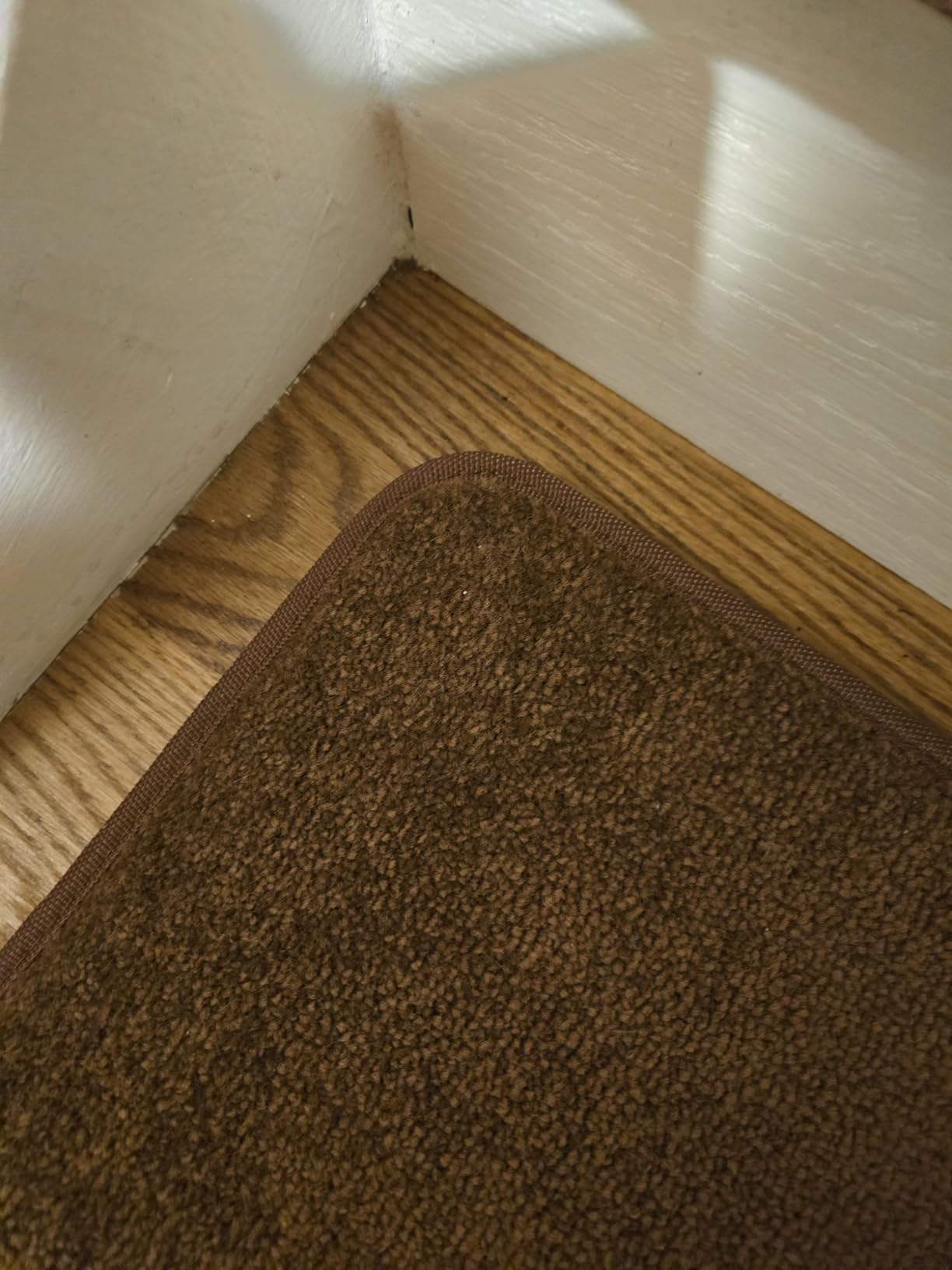
Installation is the easiest of the carpet options. The TPR backing needs no tape, glue, staples or nails, and the treads sit flat without a fight, which also removes the packaging ridge problem that plagues folded flat-weave packs.
It doubles as floor protection. The polypropylene surface takes daily wear and pet claws without marking the hardwood, so a household worried about both slip risk and floor damage gets two problems addressed by one purchase.
The bulk is the honest drawback. 1.2 inches takes a real bite out of tread depth, and if a top step already feels short, this makes it shorter. At 15.3 pounds for fourteen pieces, it is also the heaviest pack to carry up a staircase, which is why it suits a two-person install rather than a solo one.
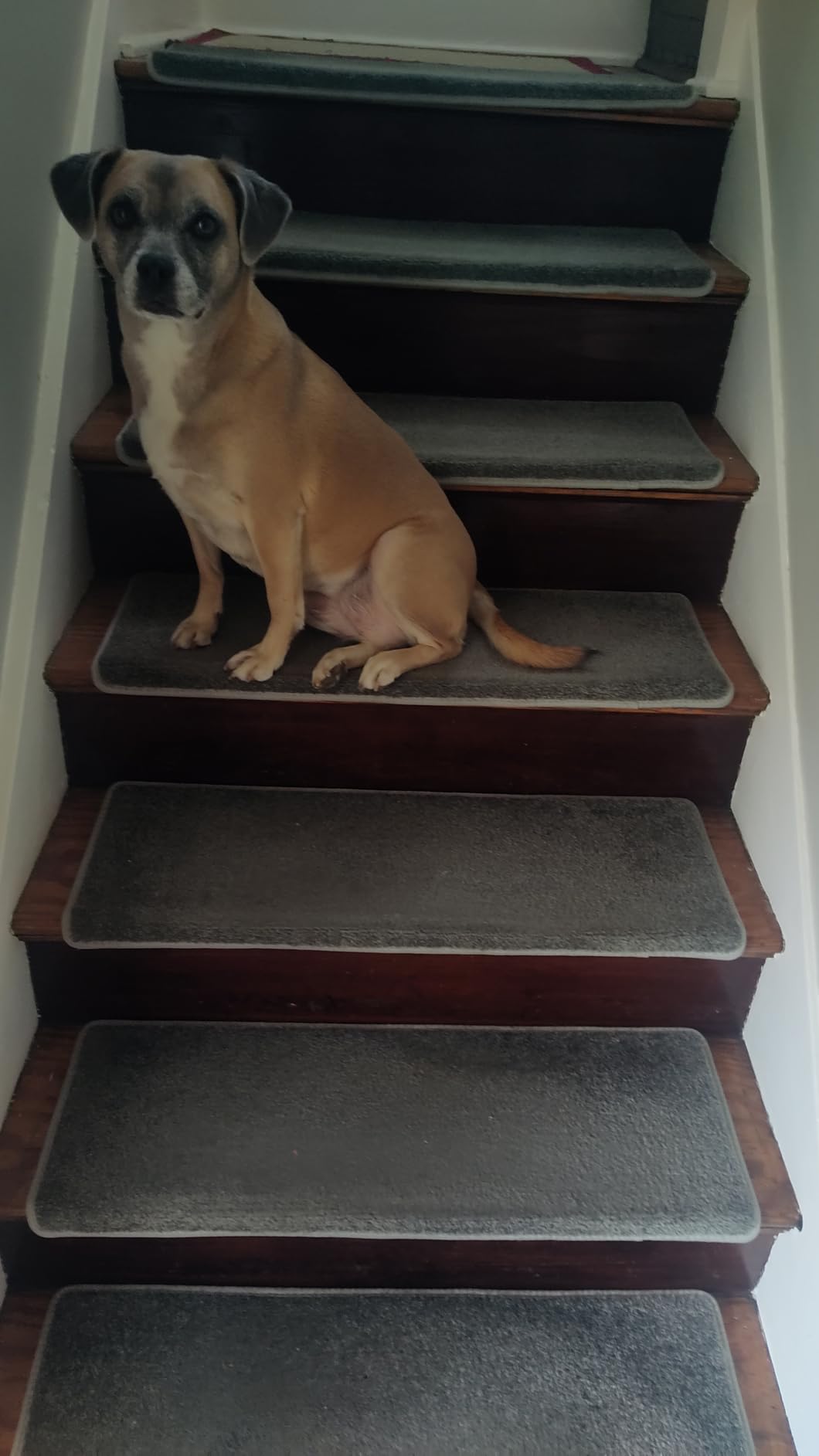
Who This Works Best For
This is the pick for arthritis, knee or hip pain, and neuropathy, where the impact of each step is the limiting factor rather than grip. It is also the best-looking option for a finished or visible staircase, since the trellis pattern reads as a fitted runner rather than a safety strip.
Choose it when a professional-looking result matters and the household has two people available for the install. It suits a home where the stairs are the main route and noise is a genuine complaint.
Where It Falls Short
The profile is too thick for some stairs, and care is hand wash only, so a 14-piece set is more work to keep clean than a machine-washable flat pack. A dog or cat that catches a claw on the folded nose can lift the edge over time.
Because the pile is deep, this is an indoor product. Do not put it on a damp basement or porch step, where the backing will hold moisture against the wood.
8. Butizone Pre-Cut Clear Strips – Best Wider Clear Grip Without Measuring
Butizone Stair Treads Non Slip 6″ x 30″, 15-Pack Pre-Cut Clear Anti Slip Strips for Wooden Steps Indoor, Transparent and Waterproof Grip Tape, Safety for Elderly and Dogs
6 x 30 inch, 15 strips
Clear PEVA plastic
Waterproof adhesive
Roller and scraper included
Pros
- Pre-cut sizes remove all measuring
- High transparency keeps the stair look
- Fine protrusions add traction gently
- Waterproof and wipe clean
Cons
- Firm surface with no foot padding
- Narrower than full carpet coverage
- Removal needs slow careful peeling
Six inches of width is the sweet spot between the barely-there 4 inch strips and a full carpet tread. In our install, that covered the entire walking band of a standard step without the visual weight of anything opaque.
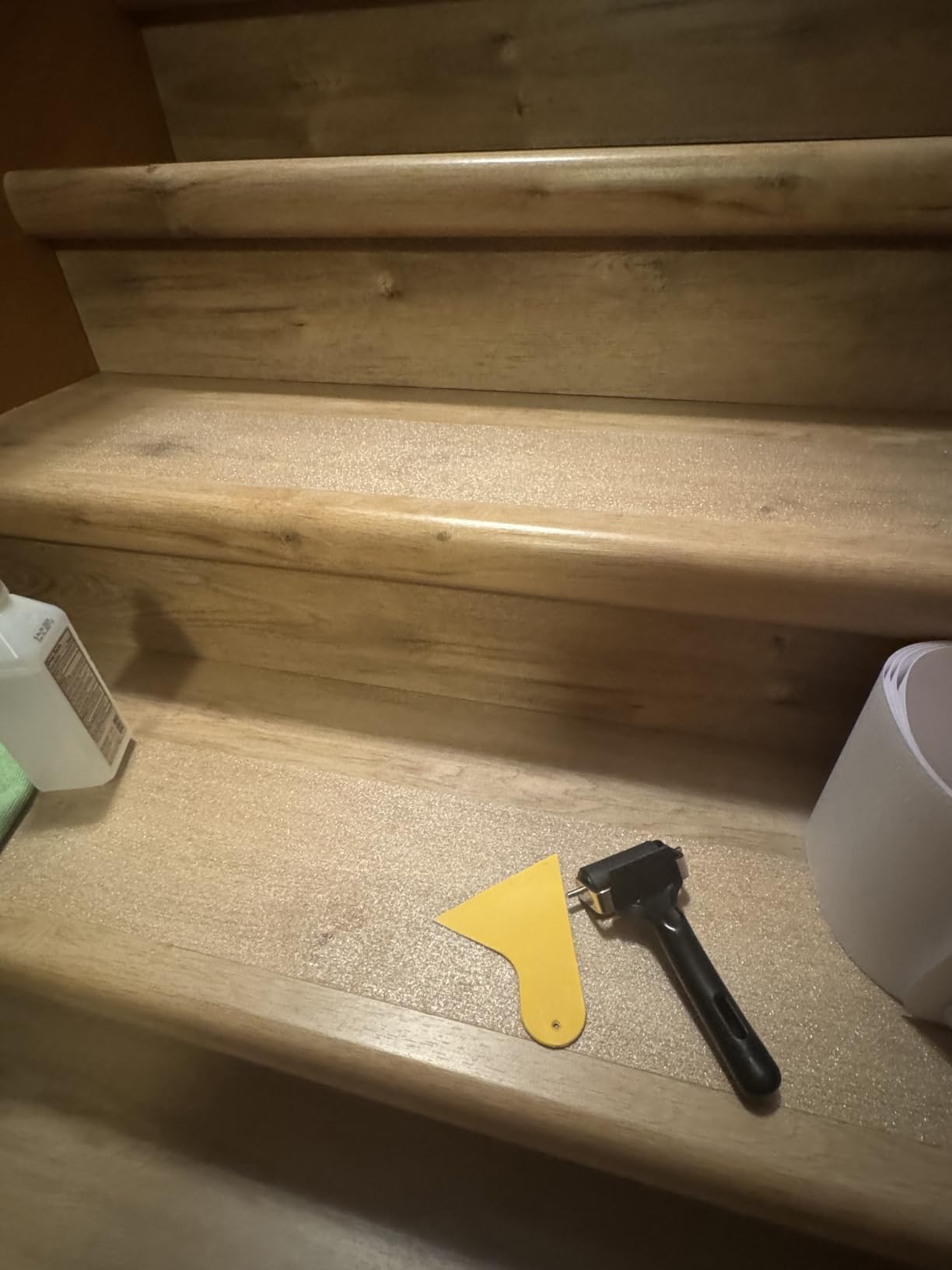
These are genuinely pre-cut and pre-sized, which removes the single most common install mistake: measuring wrong. A caregiver working alone in a dim stairwell can stick a strip without a tape measure, a pencil, or a second pair of hands.
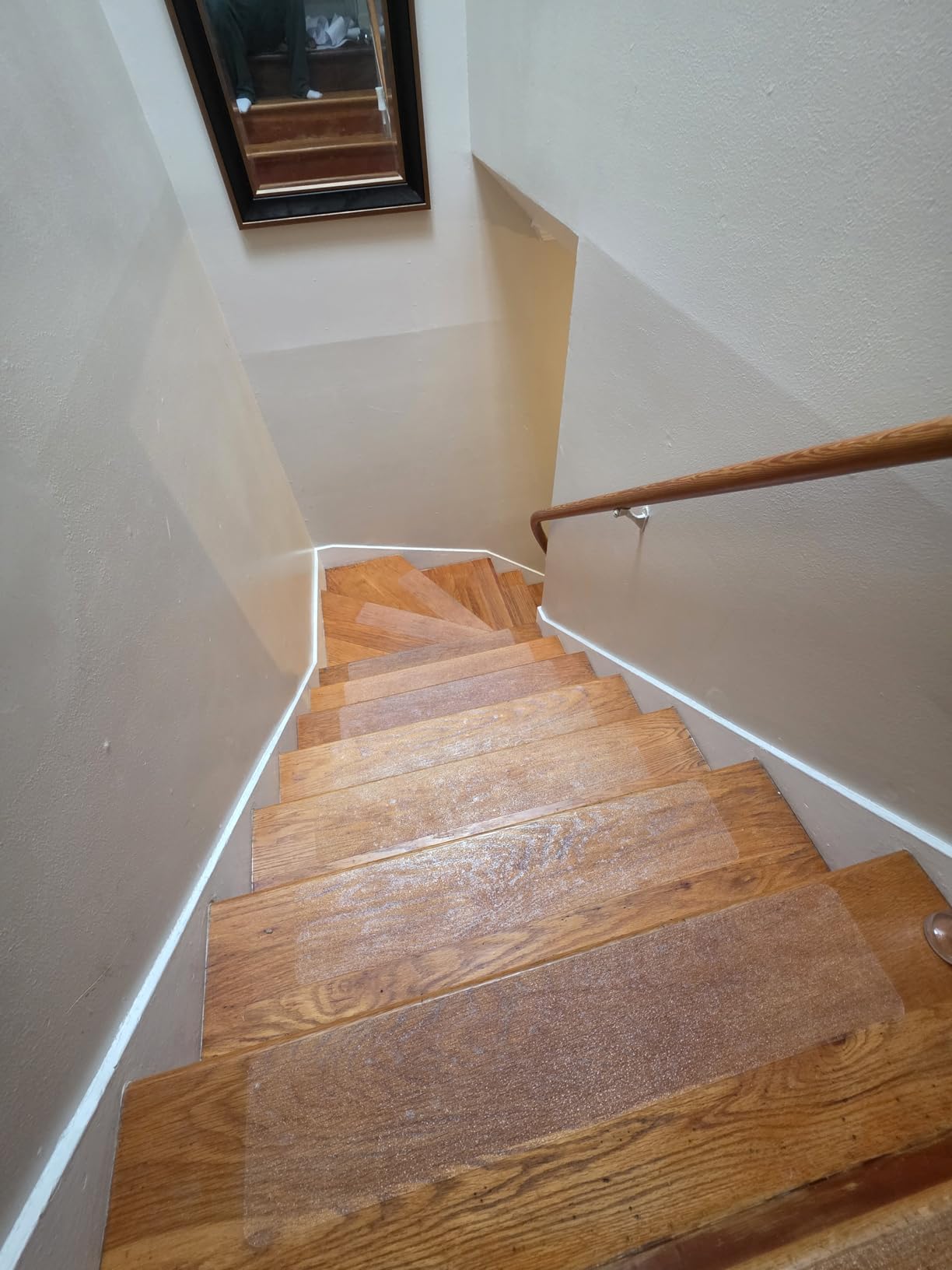
The fine protrusion texture improved traction without feeling abrasive, and unlike the grit-based tapes here, it stays comfortable for a socked foot. The waterproof adhesive keeps its hold when the step is wet or being wiped down, which is a meaningful difference on a kitchen-adjacent flight.
It removed cleanly from hardwood, tile and marble in our test, and the roller and scraper both ship in the pack, which is more than several competitors manage. That inclusion is the difference between a solid bond and a corner that peels up in a season.
The surface is firm rather than cushioned, so it does nothing for joint comfort. Removal also demands patience. The backing film has to be peeled slowly and steadily or it tears and leaves a strip of adhesive behind.
Who This Works Best For
Pick these for a single older adult installing alone, or for a household that wants clear grip on tile or marble where a carpet tread would be out of place. The pre-cut sizing is a genuine help when the installer cannot measure comfortably.
They are a good second layer on stairs that already have thin carpet treads, adding edge grip without introducing bulk, and they wipe clean easily in a home where hygiene matters.
Where It Falls Short
There is no padding, so a senior with painful knees will not find this comfortable over a long flight. Coverage is also narrower than a carpet runner, so a wide step still shows bare wood behind the strip.
The listed size assumes a standard step depth. On unusually deep or shallow treads you will have visible gaps, and the strips cannot be trimmed without damaging the edge profile.
9. COSIMIXO Reflective Anti-Skid Tape – Budget Grip for Concrete and Outdoor Steps
COSIMIXO 4″ x 30″ 10Pack Anti Slip Stair Tread with Reflective Strips,Best Grip Non Skid Tape,Anti-Skid Tape, High Traction Adhesive for Stairs Step
4 x 30 inch, 10 strips
Abrasive traction face
Yellow reflective strip
Waterproof, indoor and outdoor
Pros
- Reflective edge shows the step line
- Handles heavy traffic and weather
- Pre-cut lengths install fast
- Adheres to many surface types
Cons
- Only 4 inches wide
- Abrasive and hard with no padding
- Brand states slip resistance is not guaranteed
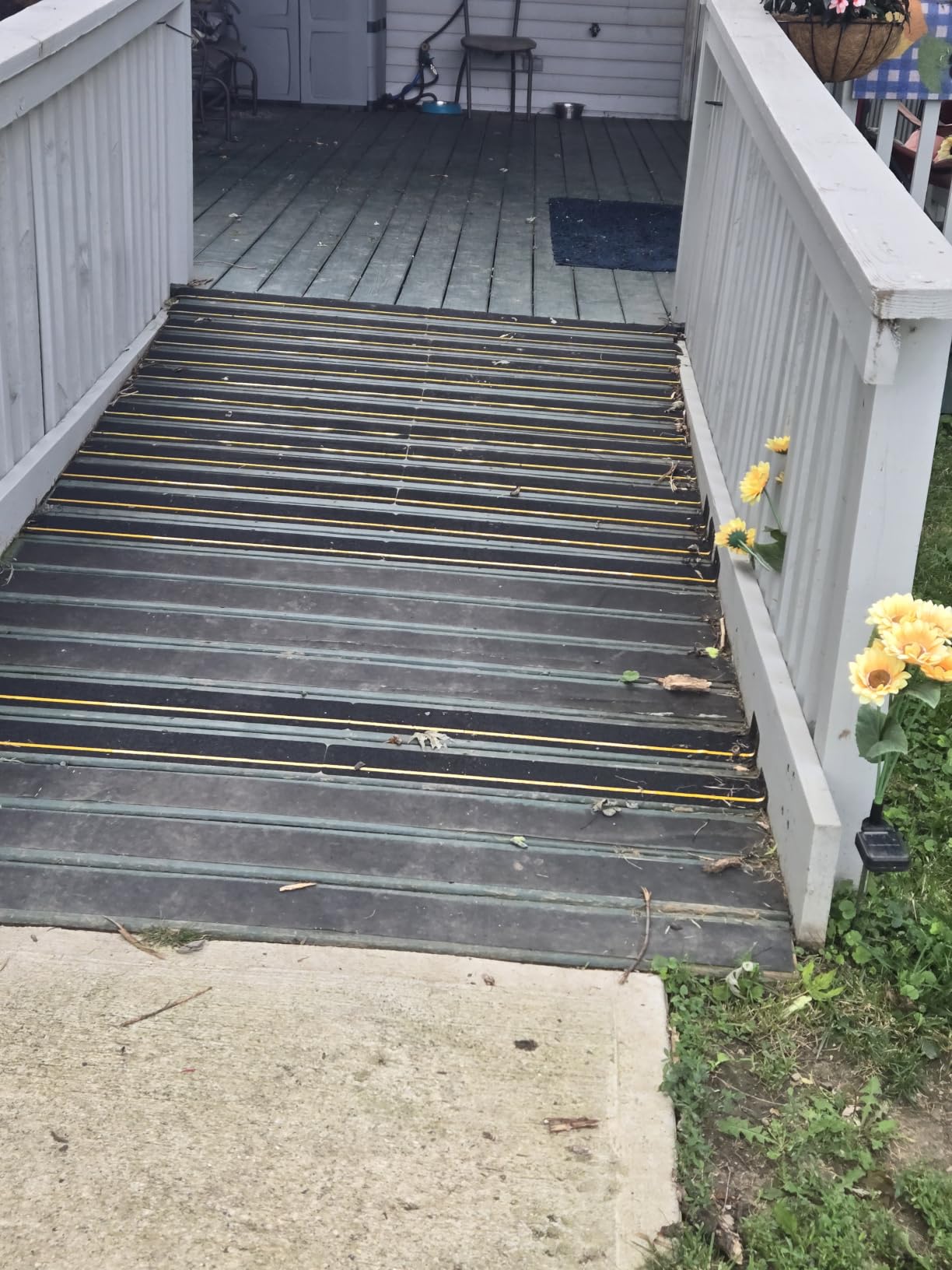
This is the tape to buy when the stairs are concrete, metal, or outdoors and the budget is the first constraint. It is the least expensive route to a real grip surface, and the reflective strip gives you edge visibility that plain black tape cannot.
We applied it to a painted concrete garage step in wet conditions and the traction held where smooth tape had failed. The listed resistance to rain, snow, frost, sun, oils and detergents matches what we saw after several weeks of weather exposure.
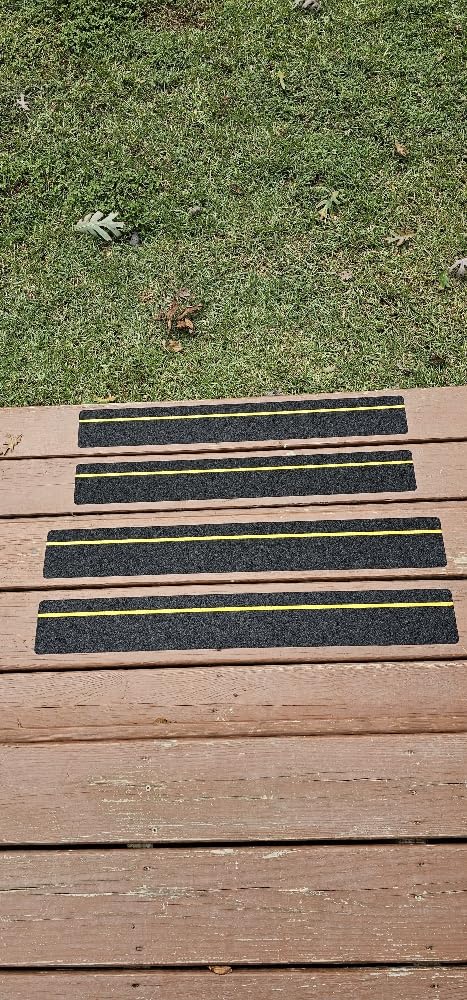
Surface compatibility is its other strength. It adheres to wood, tile, stone, concrete, metal, plastic and glass, so one pack covers a garage flight, a basement and a set of porch steps without a second purchase.
Installation needs no nails, no roller and no glue. Peel, press, and walk on it, which makes it the fastest install in this roundup and the easiest to hand to a senior for a single step.
At 4 inches wide it covers a narrow band, and the abrasive texture is hard with no cushioning at all, so it is a poor choice for a barefoot household. The brand itself notes that grip is increased but slip resistance is not guaranteed in every condition, which is an honest caveat we would repeat to a family member.
Who This Works Best For
This fits a caregiver who needs a quick fix on one or two steps today, on a garage, porch or basement flight where moisture rules out carpet. The reflective edge helps when the stairwell is lit from one direction and the lower steps fall into shadow.
It is the sensible pick for a home with a cane or walker user who only manages a few steps, and for anyone who wants to try grip tape before committing to a full tread pack.
Where It Falls Short
Narrow coverage and a hard surface are the two limits. On a wide indoor staircase, a person can place a foot beside the strip entirely, which means the tape adds grip without guaranteeing it.
Because it is abrasive, it will wear through faster than a rubber-backed carpet tread in a high-traffic indoor stairwell. Use it where the traffic is light or the surface is already slippery.
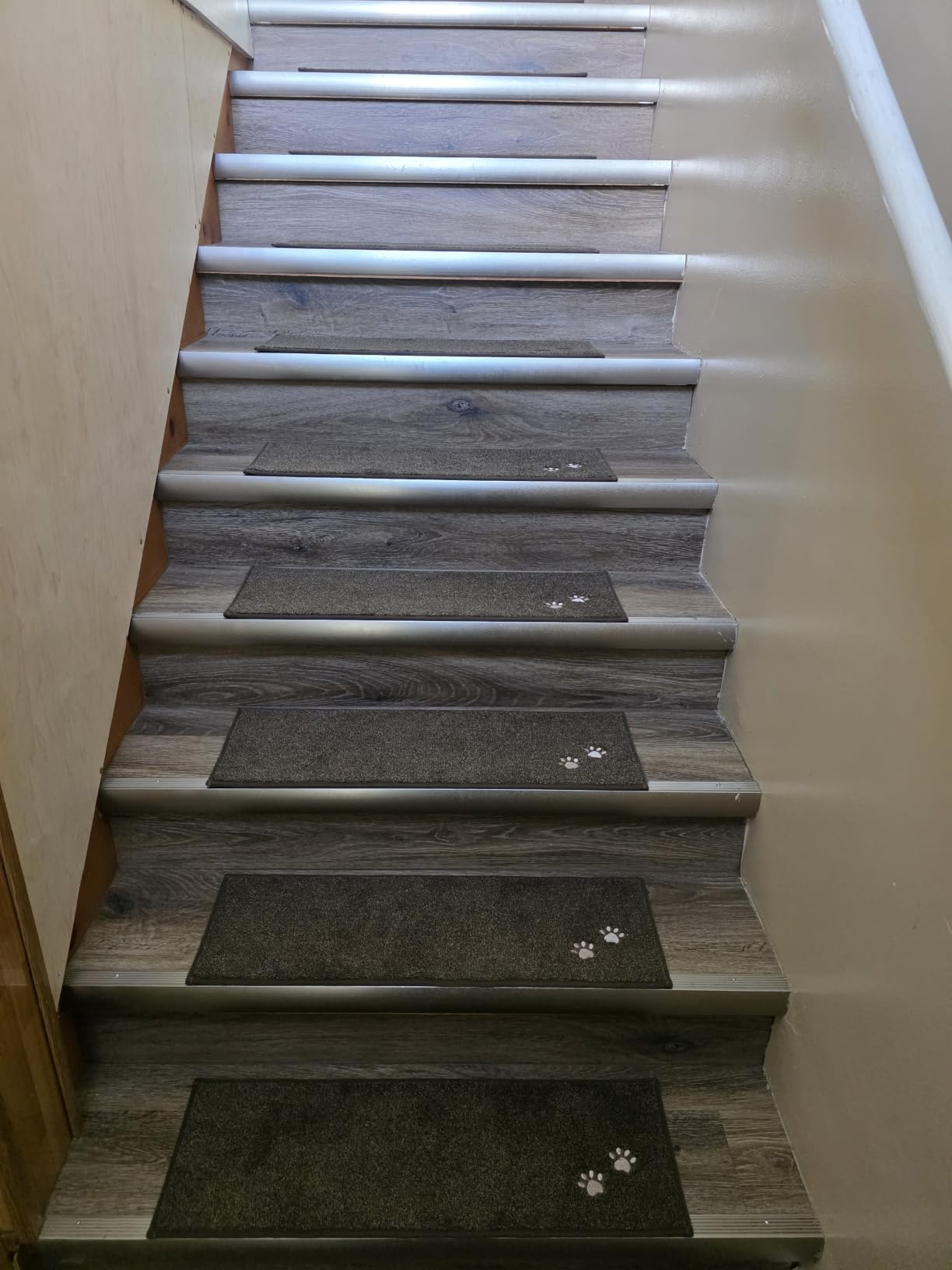
10. BEQHAUSE TPE-Backed Carpet Treads – Best Washable Soft Pile
BEQHAUSE Stair Treads Non Slip for Wooden Steps 28″ x 9″, 4pcs, Charcoal
28 x 9 inch, 4 pieces
0.4 inch polyester pile
Proprietary TPE backing
2.2 pounds per pack
Pros
- Highest average rating in the group
- TPE backing grips without glue
- Soft 0.4 inch pile cuts noise
- Machine washable and keeps its grip
Cons
- Only 4 pieces per pack
- Indoor only
- not water resistant
- Embroidered paw print is a specific look
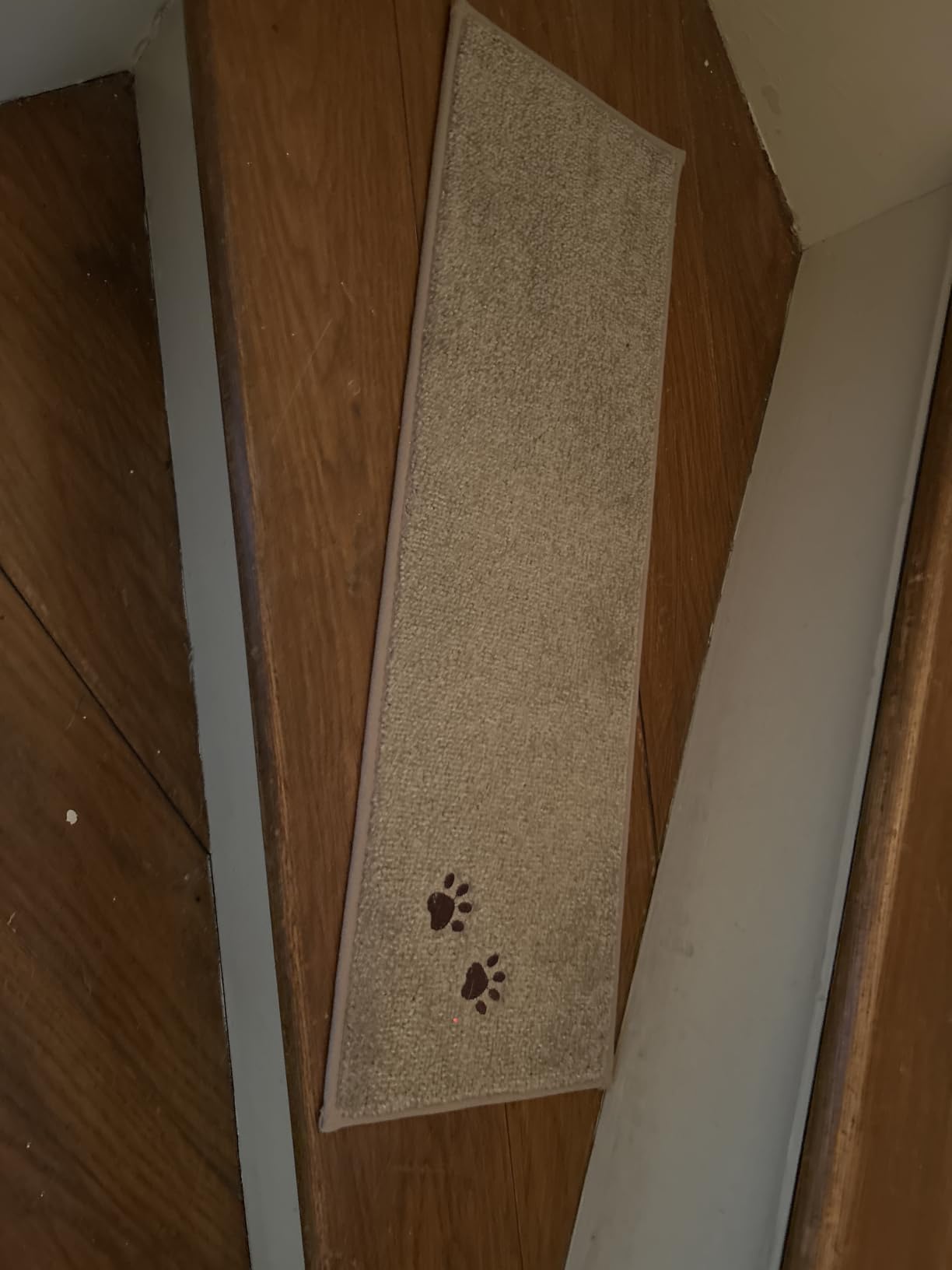
This is the highest-rated product we reviewed, at 4.8 stars, and the reason is straightforward: it does the small things properly. Reinforced stitching, a TPE backing that holds without adhesive, and a pile that survives the washing machine with its grip intact.
At 28 by 9 inches with a 0.4 inch pile, the coverage-to-thickness ratio is the most useful of the carpet options here. It covers most of a step, stays low enough not to catch a foot, and adds enough softness to quiet a stairwell.
Being washable is a bigger deal than it sounds. A tread that can go through a machine and come back with its non-slip properties means a home with a mobility-limited person does not have to keep replacing a grimy set every few months.
Removal is clean and repeatable. The treads lift off without residue and can be repositioned without double-sided tape or glue, which makes them a good rental solution and a good option for a house that might change hands.
Two constraints. The pack holds four pieces, so a full flight needs more than one, and the construction is not water resistant, which rules out basement and porch steps. The embroidered dog paw pattern is also a specific look, and we would suggest checking it against the home before buying rather than after.
Who This Works Best For
Pick these for a home that needs to wash its stair treads, or for a household where hygiene is being handled by a caregiver. The 0.4 inch profile also works well for a senior who uses a cane and wants coverage without a trip edge.
They suit a family that moves, or that rents, because the treads can be lifted, washed, and reinstalled in a new house without touching the floor. For a high-traffic indoor flight, they are among the most economical choices per step covered.
Where It Falls Short
The four-piece pack is the main inconvenience, since a 13-step flight needs four packs to cover it fully. The smaller pack also means more edges, and edges are where carpet treads lift first, so check corners monthly.
Indoor use only, and the decorative pattern is not neutral. If the staircase is a focal point in the home, a brown or grey stripe is the safer aesthetic bet.
How to Choose Stair Treads for Seniors
Tread, Riser, Nosing: the Three Parts Buyers Confuse
The tread is the horizontal top surface you step on. The riser is the vertical face below it. The nosing is the projecting front edge of the tread, and it is the part that matters most for a senior going downstairs, because a descending foot lands on the nosing with almost no push-off.
Almost every slip happens there. A tread that covers only the middle of the step leaves the nosing bare, which is the single most common sizing mistake we saw. When you measure, measure from the back wall to the front edge of the nosing and cover at least the front 4 to 6 inches of that run.
Match the Tread to Your Stair Surface
On finished hardwood, clear PEVA strips or no-glue carpet treads are the safe choices. Adhesive-backed options lift cleanly here, and a senior who dislikes visible safety gear will accept a clear strip without a fight.
On carpeted stairs, only use a low-profile tread under about 0.4 inches. Anything thicker creates a second edge underfoot, which is a new trip hazard rather than a fix. And if the carpet is sagging, fix the carpet first, because no tread product addresses that failure mode.
On concrete, tile, stone and outdoor steps, grip tape or the PET-based traction strips are the right call. Carpet treads cannot survive moisture, and outdoor steps also need a surface rated below freezing, which rules out most rubber-backed products.
Measure Your Stairs and Work Out Pack Sizing
Count the treads, not the steps. A flight described as 13 steps typically has 13 treads, and you want one tread per tread, plus one spare in case a piece is damaged or needs cutting.
Then measure the width of a typical step from one side to the other. A 36 inch wide stair needs a tread at least 30 inches long to cover the walking band, and a 30 inch tread on a 36 inch stair leaves bare wood on both edges where a shoe can land.
Worked example: a 13-tread oak flight, 36 inches wide, no carpet. A 15-pack of 8 by 30 inch treads covers the full run with two spare pieces. A 4-piece pack of 28 by 9 inch treads needs four packs for the same flight, which changes the cost math considerably.
How to Install Adhesive Treads So Corners Stay Down
Start with a clean, dry surface. Wipe the nose of each step with a damp cloth and let it dry fully, because dust and moisture are the two things that most often defeat an adhesive. Do not apply over a waxed or freshly sealed finish.
Mark the position before you peel the backing, so each strip sits at the same distance from the edge. Peel slowly from one corner rather than tearing the film off, and lay the strip down a few inches at a time to avoid bubbles and folds.
Press the surface firmly with a roller, a foam block, or the edge of a card, working from the center out to the corners. Reviewers across these products mention the same point repeatedly: a strip that is not rolled down is the strip that peels up in a season.
Give the flight 24 hours before heavy use if the treads are firmly adhesive. For the no-glue carpet packs, weigh the first two pieces down overnight to flatten the packaging fold, and recheck corners a few days later.
What Not to Put on Stairs
Loose rug runners are the first thing to remove. A runner that shifts underfoot creates exactly the trip hazard a senior cannot recover from, and it is the most common unsafe tread in older homes.
Avoid over-thick foam pads as well. Anything above about half an inch on an indoor stair creates a new edge for a descending foot, and the raised lip catches toes and walker feet.
Also skip smooth hard rubber laid on a hard surface with no texture. It feels secure to the installer and slippery to a person in socks. Texture, not hardness, is what creates friction, and that is why grit-backed strips outperform smooth ones in wet conditions.
Stair Safety Beyond Treads: Handrails, Lighting, and Cane and Walker Use
Treads are one intervention, not a system. Handrails on both sides, securely mounted, do more for a senior on stairs than any product on this page, and the highest-voted advice in r/AgingParents fall-prevention threads puts sturdy rails first and contrast second.
Lighting is the fix nobody prioritizes. A senior climbing stairs in the dark cannot be helped much by a tread they cannot see, so a night light at the top and bottom of the flight is the cheapest safety upgrade in a house. On a landing-heavy staircase, a second rail on the wall side is worth installing.
On using treads alongside a cane or walker: yes, they are safe to combine, and the combination is the recommended setup. The rules are simple. Keep the profile under about 0.4 inch so walker feet clear it, confirm the treads cannot shift under the frame, and never let a tread be the only thing supporting weight at the top of a flight where the person is rising from a chair.
Finally, if the treads feel like the wrong answer, ask an occupational therapist before you buy. A home assessment costs less than a fall and produces a plan specific to the person rather than the staircase. If the goal is keeping a parent connected while they recover at home, our picks for tablets for seniors cover video calling and medication reminders that reduce the trips to the stairwell in the first place.
Frequently Asked Questions
What is the safest type of stair covering for seniors?
The safest covering is a low-profile tread with a textured surface and a contrasting edge, installed alongside handrails on both sides. A rubber-backed carpet tread under half an inch thick works on wood and tile, while clear PEVA strips or grit-backed tape suit tile, concrete and outdoor steps. Treads add friction; they do not fix a sagging carpet or a missing rail.
What is the best type of stair treads for my stairs?
Match the tread to the surface and the risk. Clear adhesive strips for finished hardwood when appearance matters, pre-cut carpet treads for cushioned indoor grip, grip tape with a reflective edge for concrete or outdoor steps, and glow-in-the-dark strips when the stairwell is dark. Keep any indoor carpet tread under half an inch thick so it cannot create a trip edge.
What are the best non-slip rubber treads for stairs?
The best rubber-backed options here are the MBIGM 8 by 30 inch 15-pack and the COSY HOMEER 28 by 9 inch set, both rated 4.6 stars across thousands of reviews. Their TPE or TPU backings grip wood, tile and marble without permanent adhesive and lift off with no residue, which makes them practical in rentals. The PURE ERA bullnose set adds the most cushioning at 1.2 inches thick.
What is the best non-slip tape for stairs?
For grip that survives wet, icy or painted conditions, the LifeGrip PET-based strips rate well because the surface is abrasive rather than smooth and the base tolerates 14F to 140F. The COSIMIXO reflective tape is the budget option for concrete and outdoor steps, and it adds a reflective edge, though the brand notes slip resistance is not guaranteed in every condition.
Will stair treads stop my elderly parent falling down the stairs?
Treads reduce the chance of a slip by adding friction and edge visibility, but they do not make stairs safe on their own. Most stair falls happen on the way down, where the person is facing backward. Combine treads with handrails on both sides, lighting at the top and bottom of the flight, and a contrast edge, and ask an occupational therapist for a home assessment if falls have already happened.
The Bottom Line on Best Stair Treads for Seniors in 2026
The MBIGM 15-pack is the pick we would install first, because the no-glue TPU backing holds on wood, comes up clean, and carries the largest review base at a 4.6 average. For a wide step that needs more coverage, the COSY HOMEER 28 by 9 set is the value choice, and for a dark stairwell or low vision, the LifeGrip glow strips are the only option here built around visibility.
Take the measurement before you order. Count treads, measure the width of one step, and add a spare piece, because a half-covered staircase is where people get careless. Then pair whatever you choose with a handrail on both sides and a night light at the top of the flight, because no tread substitutes for either one.
If footwear is part of the problem too, our picks for walking shoes for seniors and orthopedic shoes for seniors cover the grip side of the equation that a tread cannot reach. And if the stairs themselves are becoming the barrier, read our stair lift guide for seniors before deciding treads are enough.